
A Complete Uganda Wildlife Travel Guide. Uganda is one of Africa’s most diverse and rewarding wildlife destinations. Known as the Pearl of Africa, the country offers a remarkable combination of savannah plains, tropical forests, wetlands, lakes, rivers, and mountains.
A Uganda wildlife safari is not limited to traditional game drives. You can watch elephants and lions on the savannah, cruise along the Nile among hippos and crocodiles, track chimpanzees in the rainforest, and trek through Bwindi’s ancient forest in search of mountain gorillas.
This diversity makes Uganda an excellent choice for travelers looking for a safari that combines wildlife, primates, nature, adventure, culture, and beautiful scenery.
Whether you are planning your first African safari, a family holiday, a luxury adventure, a honeymoon, or a photography trip, Uganda offers experiences that can be tailored to different interests and budgets.
This complete Uganda wildlife travel guide will help you understand where to go, what to see, what to do, when to visit, what to pack, and how to plan your safari.
Why Choose Uganda for a Wildlife Safari? – A Complete Uganda Wildlife Travel Guide
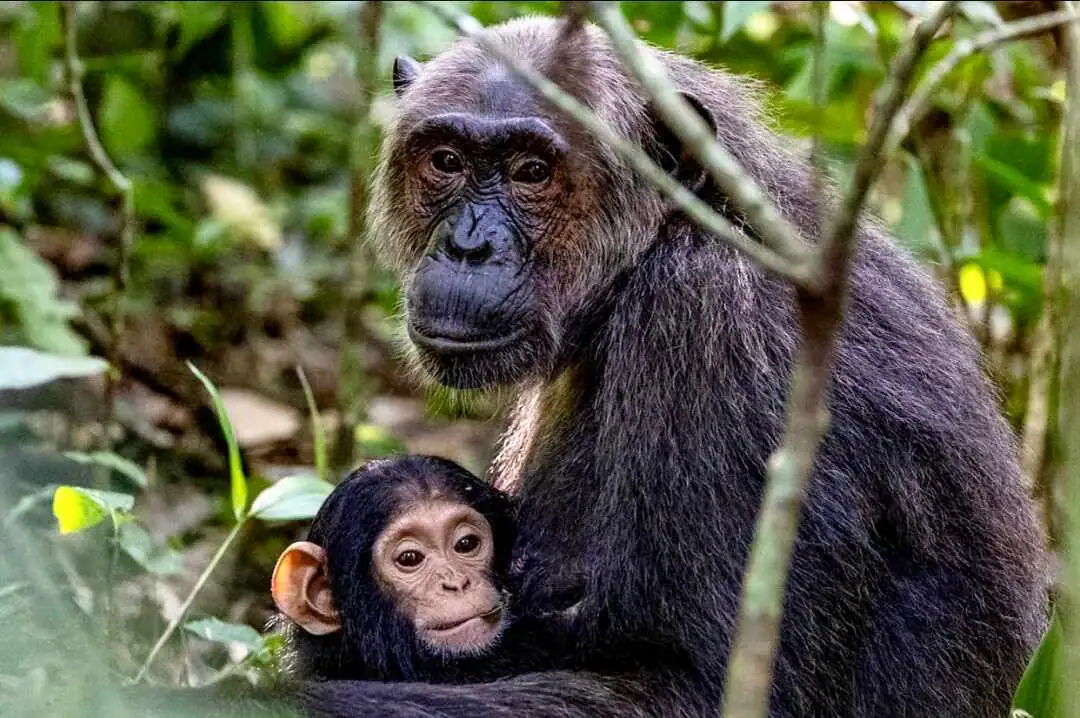
Uganda offers something that many safari destinations cannot easily match: a wide variety of wildlife experiences within one country.
A single trip can combine traditional African game viewing with rainforest adventures and encounters with some of Africa’s most fascinating primates.
Depending on your itinerary, you can experience:
- Game drives across open savannah.
- Boat safaris along rivers and lakes.
- Chimpanzee tracking.
- Gorilla trekking.
- Golden monkey trekking.
- Guided nature walks.
- Bird watching.
- Wildlife photography.
- Cultural experiences.
- Community visits.
- Mountain hiking.
Uganda is also less focused on one particular type of safari experience. Instead, it gives travelers the opportunity to explore several ecosystems during the same journey.
For visitors who want variety, this is one of Uganda’s greatest advantages.
Uganda’s Wildlife at a Glance
Uganda is home to a remarkable variety of wildlife.
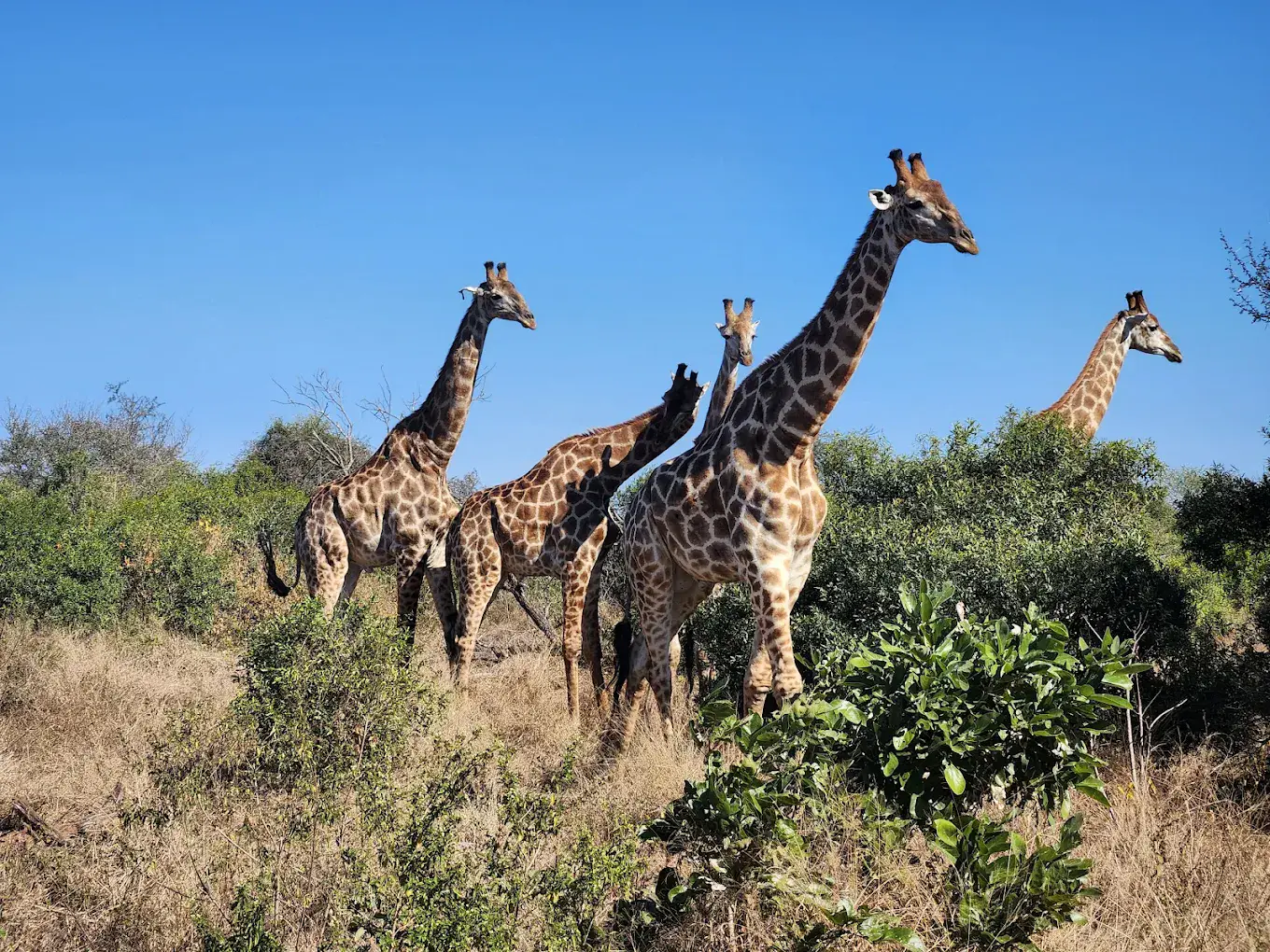
The country’s national parks and protected areas support elephants, lions, leopards, buffaloes, giraffes, hippos, zebras, antelopes, chimpanzees, mountain gorillas, golden monkeys, and many other species.
Uganda is also an exceptional birding destination, with more than 1,000 recorded bird species.
The country’s diverse habitats are the reason wildlife experiences can vary so dramatically from one destination to another.
The savannah parks are ideal for traditional game drives, while the tropical forests are particularly important for primates and forest birds.
Best National Parks for Wildlife Safaris in Uganda – A Complete Uganda Wildlife Travel Guide
Uganda has several national parks, and each offers a different experience.
Choosing the right parks is therefore an important part of planning your safari.
1. Murchison Falls National Park
Murchison Falls National Park is Uganda’s largest national park and one of the country’s most popular wildlife destinations.
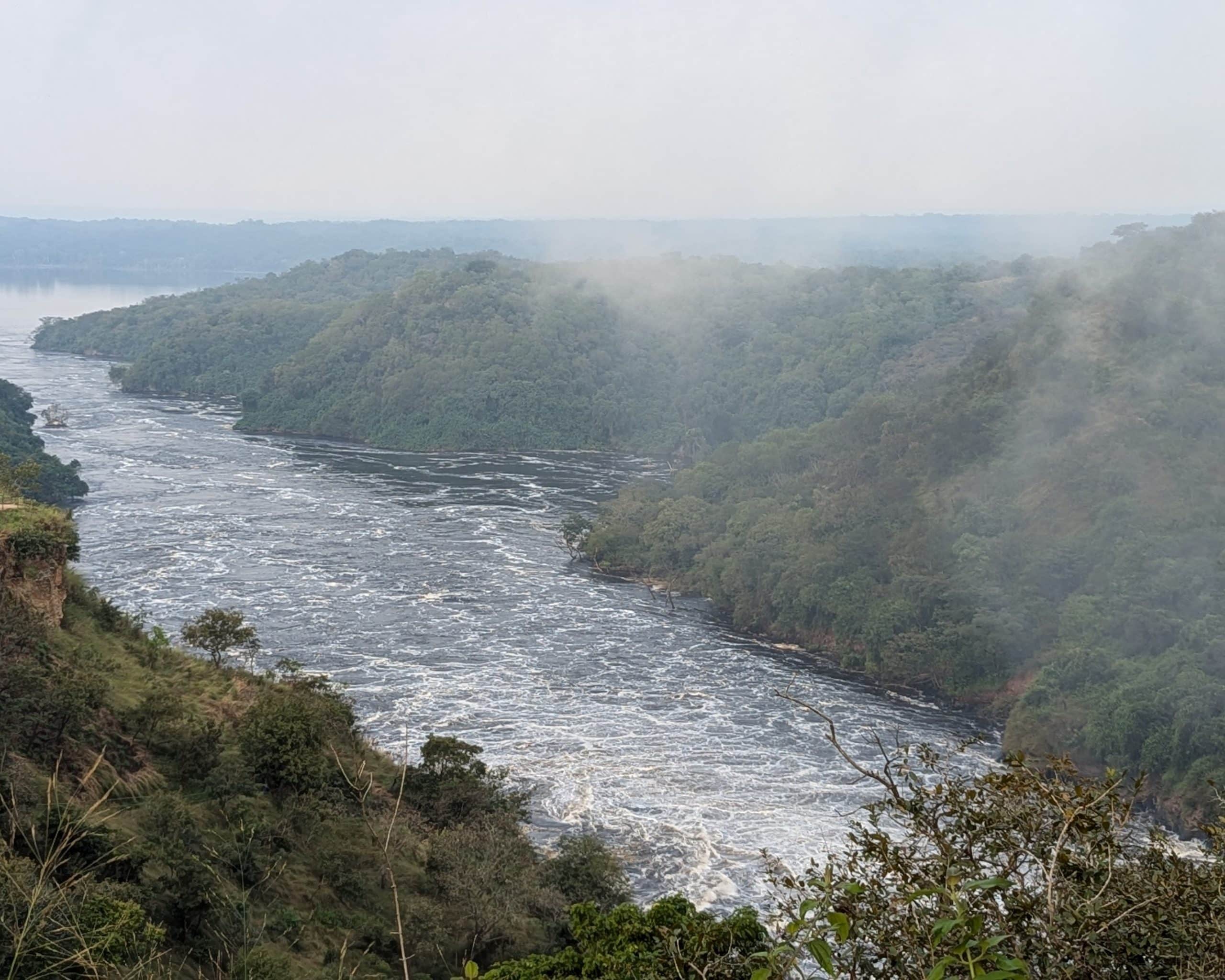
The park is named after the spectacular Murchison Falls, where the Victoria Nile is forced through a narrow gorge before continuing toward Lake Albert.
The landscape combines open grasslands, woodland, wetlands, and riverine habitats.
This variety provides excellent conditions for wildlife viewing.
Wildlife in Murchison Falls – A Complete Uganda Wildlife Travel Guide
A game drive may give you the opportunity to see:
- Elephants
- Lions
- Leopards
- Buffaloes
- Rothschild’s giraffes
- Uganda kob
- Jackson’s hartebeest
- Waterbucks
- Warthogs
- Oribi
- Hippos
Game Drives
Morning game drives are especially rewarding because many animals are active during the cooler hours of the day.
Your guide will help you search for predators and identify different species while explaining the behavior and ecology of the animals you encounter.
Nile Boat Cruise
The boat cruise on the Victoria Nile is one of the highlights of visiting Murchison Falls.
As you travel along the river, you can see large numbers of hippos, crocodiles, elephants, buffaloes, and water birds.
The cruise also takes you toward the base of the falls, providing an impressive view of the powerful Nile rushing through the gorge.
2. Queen Elizabeth National Park – A Complete Uganda Wildlife Travel Guide
Queen Elizabeth National Park is one of Uganda’s most scenic and diverse wildlife destinations.
The park contains savannah plains, forests, wetlands, lakes, and volcanic landscapes.
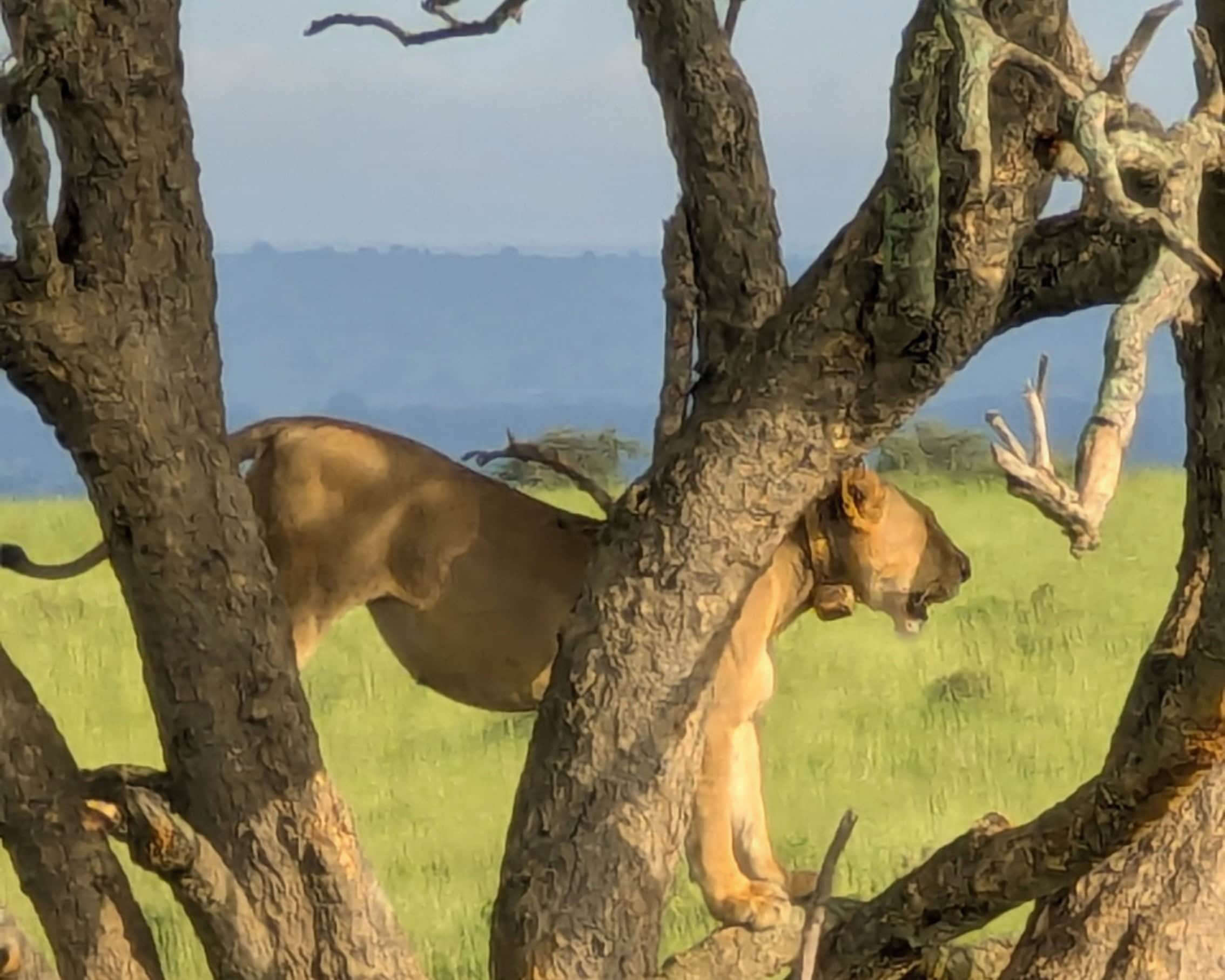
It is particularly famous for the Kazinga Channel and the tree-climbing lions of Ishasha.
Wildlife Viewing
During a game drive, you may encounter:
- Elephants
- Lions
- Leopards
- Buffaloes
- Uganda kob
- Hippos
- Warthogs
- Waterbucks
- Topi
- Bushbucks
The Kasenyi Plains are particularly popular for game viewing because of their open savannah landscape.
Kazinga Channel Boat Cruise – A Complete Uganda Wildlife Travel Guide
A boat cruise along the Kazinga Channel offers an entirely different way to experience wildlife.
Hippos can often be seen gathered in the water, while crocodiles rest along the shoreline.
Elephants and buffaloes may also come down to the water to drink.
The channel is also excellent for bird watching.
Ishasha Sector
Located in the southern part of Queen Elizabeth National Park, Ishasha is famous for its tree-climbing lions.
Seeing a lion resting in the branches of a large tree is an unforgettable safari experience.
Ishasha also offers beautiful scenery and opportunities to see elephants, buffaloes, antelopes, and other wildlife.
3. Kibale National Park – A Complete Uganda Wildlife Travel Guide
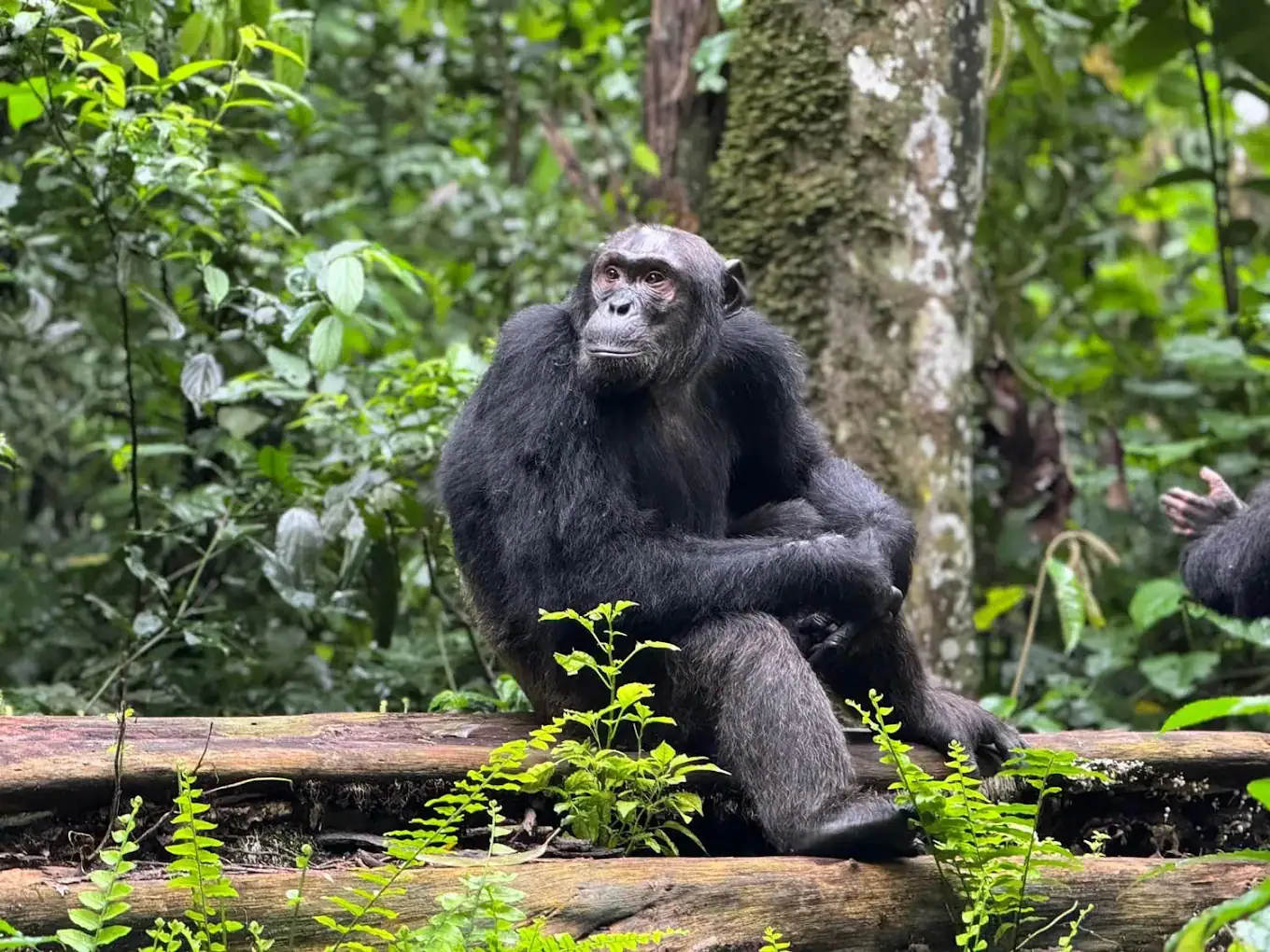
Kibale National Park is often described as one of Africa’s best destinations for primate experiences.
The park protects a large area of tropical forest and is especially famous for its chimpanzees.
Chimpanzee Tracking
Chimpanzee tracking is an exciting forest adventure.
You enter the rainforest with trained guides and trackers and follow signs of chimpanzee activity.
Unlike a game drive, this experience takes place on foot.
You may hear chimpanzees calling before you see them. When you finally locate the group, you may watch them feeding, grooming, climbing, resting, or moving through the trees.
Other Primates – A Complete Uganda Wildlife Travel Guide
Kibale is also home to several other primate species, including:
- Red-tailed monkeys
- Blue monkeys
- Black-and-white colobus monkeys
- Red colobus monkeys
- Olive baboons
- Mangabeys

Bigodi Wetland Sanctuary – A Complete Uganda Wildlife Travel Guide
Bigodi is an excellent addition to a Kibale itinerary.
The community-managed area offers guided walks, bird watching, primate viewing, and opportunities to learn about local communities and conservation.
4. Bwindi Impenetrable National Park – A Complete Uganda Wildlife Travel Guide
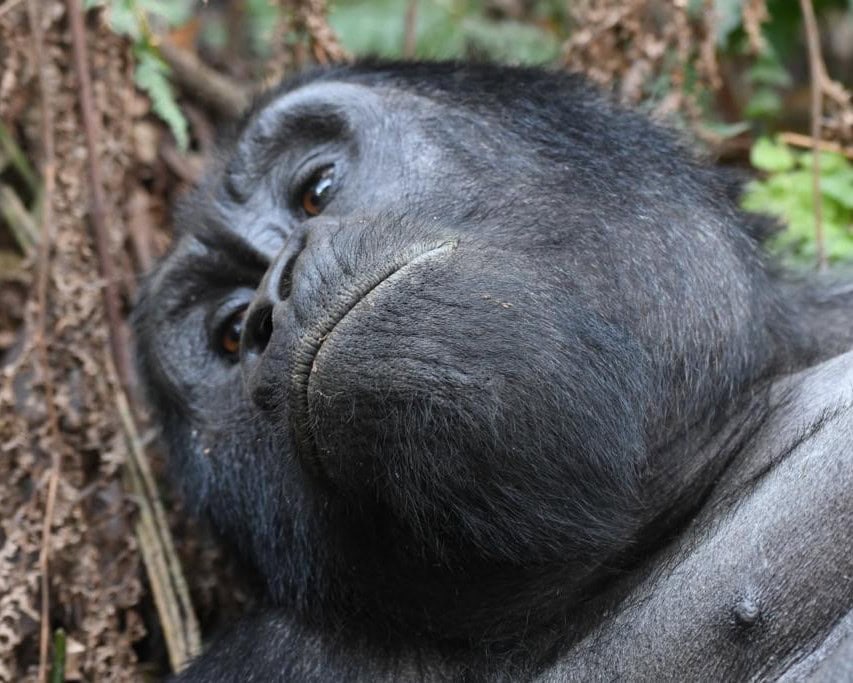
Bwindi Impenetrable National Park is one of Uganda’s most famous destinations.
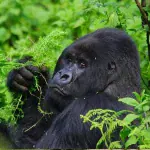
The ancient rainforest is internationally known for its mountain gorillas.
For many travelers, gorilla trekking is the highlight of their Uganda safari.
Gorilla Trekking
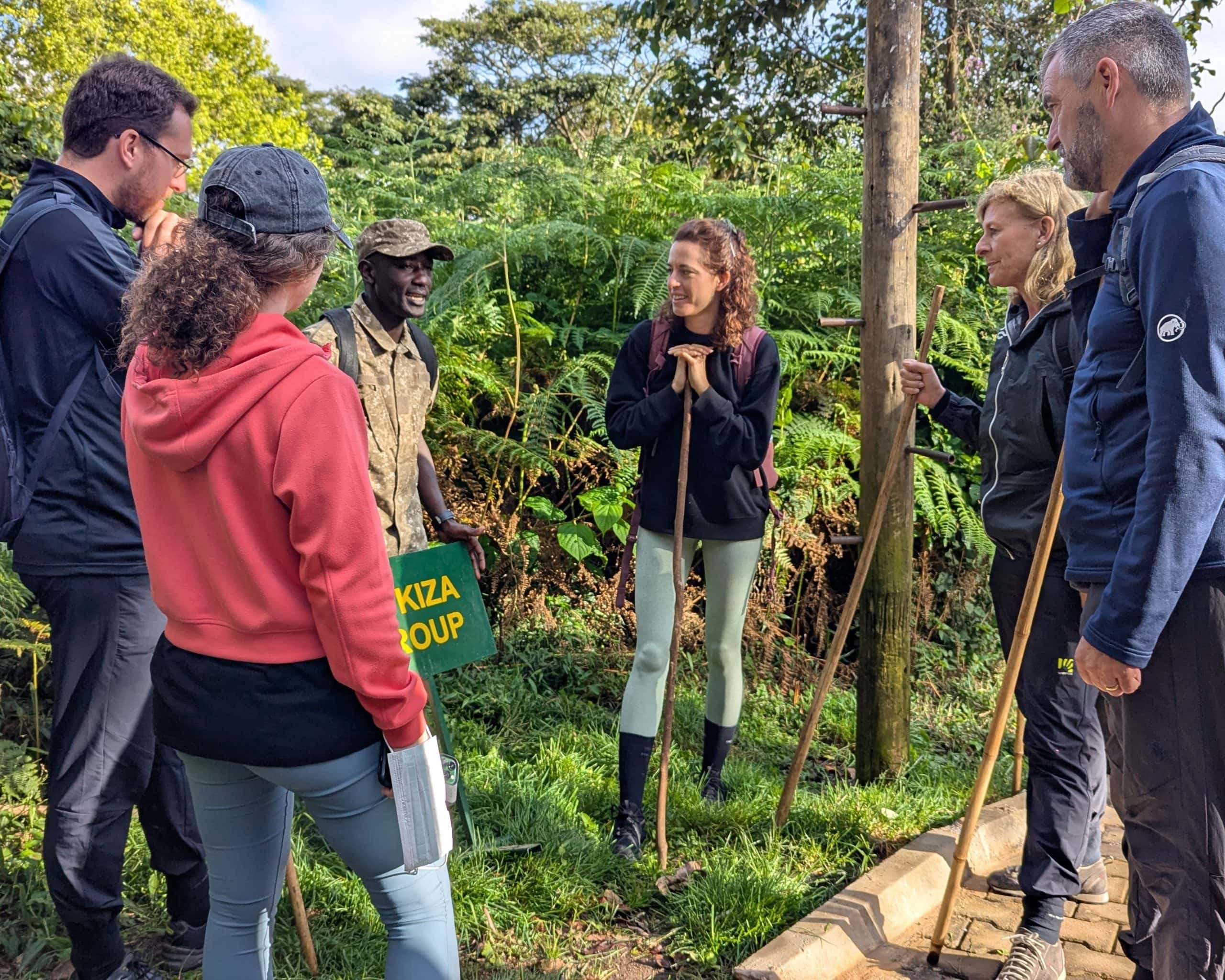
Gorilla trekking begins with a briefing before you enter the forest.
You will walk with experienced guides and trackers who search for a habituated gorilla family.
The trek can take anywhere from a relatively short walk to several hours, depending on where the gorillas are located.
The terrain can be steep, muddy, and challenging, but the experience is extremely rewarding.
When you reach the gorilla family, you may see them:
- Feeding
- Grooming
- Resting
- Playing
- Climbing
- Caring for young gorillas
- Interacting with other family members
The encounter takes place in the gorillas’ natural environment, making it very different from seeing wildlife in a zoo.
5. Mgahinga Gorilla National Park – A Complete Uganda Wildlife Travel Guide
Mgahinga Gorilla National Park is located in southwestern Uganda within the spectacular Virunga mountain region.
The park is home to mountain gorillas and is also known for golden monkey trekking.
Its volcanic scenery makes it particularly attractive to travelers who enjoy combining wildlife with hiking.
Visitors can also explore the park’s forests and enjoy views of the dramatic volcanic landscape.
6. Lake Mburo National Park
Lake Mburo National Park is one of the most accessible wildlife destinations in Uganda.
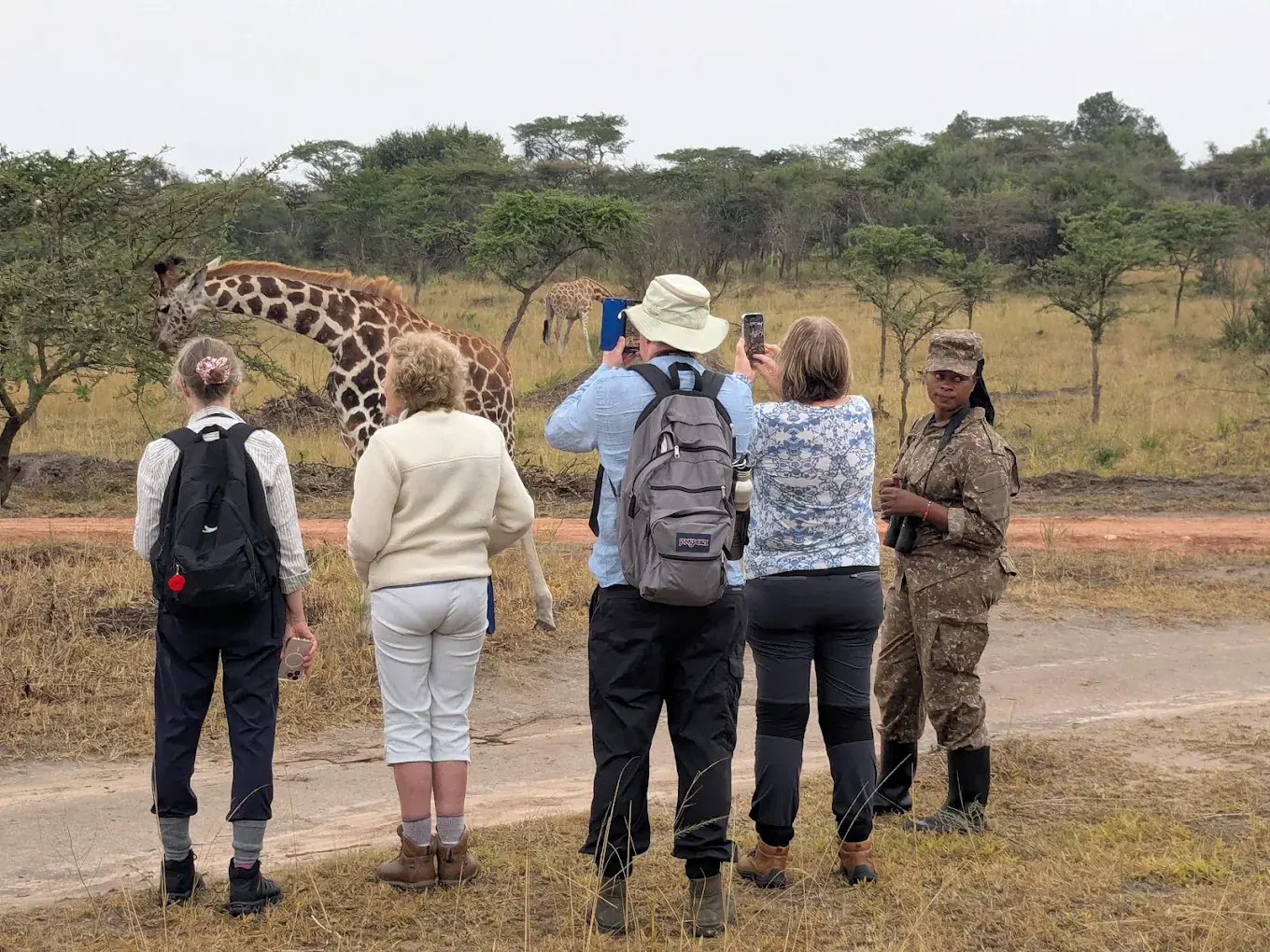
It is known for its zebras, impalas, giraffes, elands, buffaloes, hippos, and other wildlife.
The park is particularly interesting because it offers several ways to experience nature.
Activities in Lake Mburo – A Complete Uganda Wildlife Travel Guide
You can enjoy:
- Game drives
- Boat cruises
- Guided nature walks
- Bird watching
- Cycling experiences where available
A walking safari can be particularly memorable because it allows you to experience the bush without the barrier of a vehicle.
7. Kidepo Valley National Park – A Complete Uganda Wildlife Travel Guide
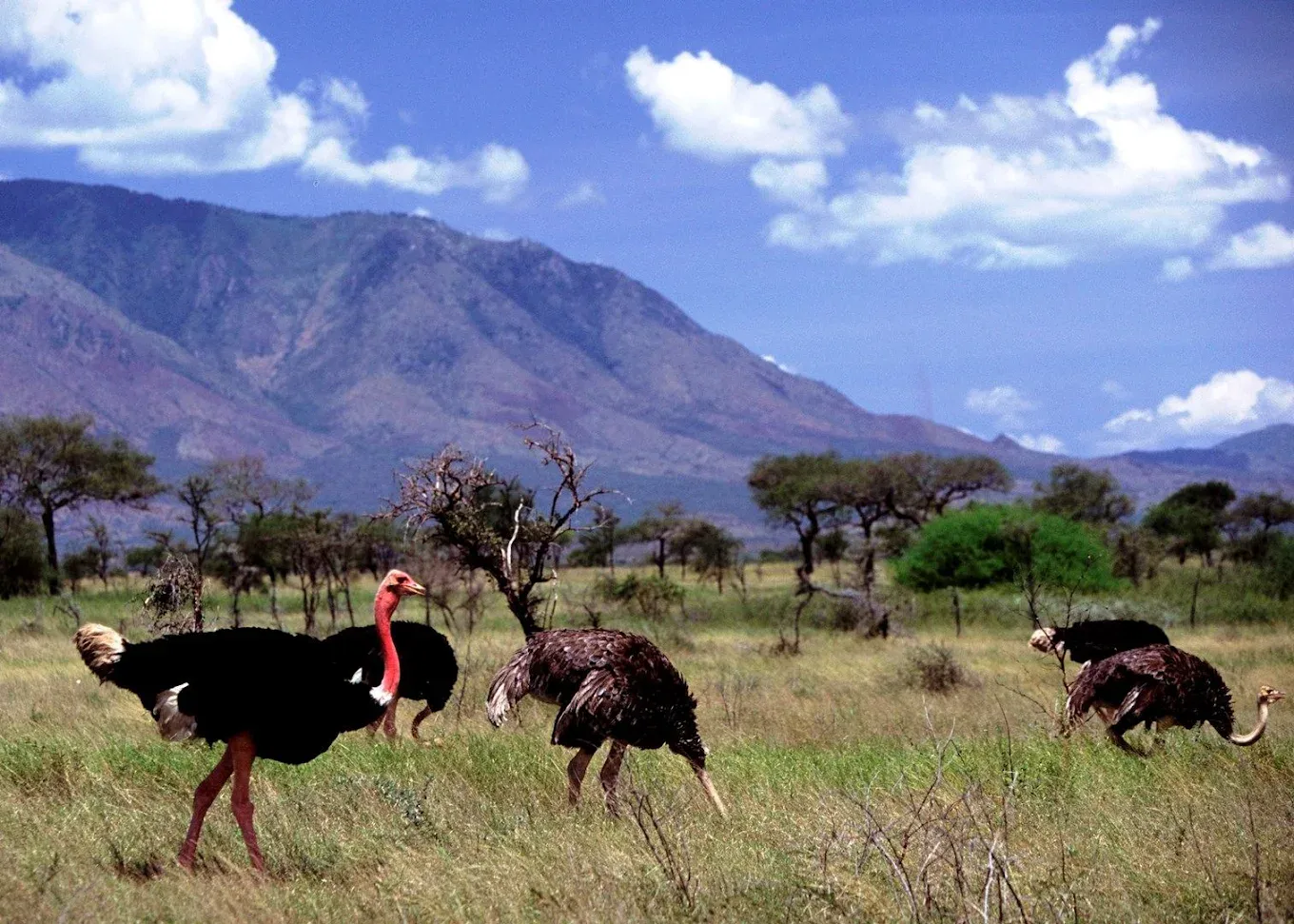
Kidepo Valley National Park is the destination for travelers looking for a more remote and wild safari.
Located in northeastern Uganda, Kidepo is characterized by expansive plains, rugged mountains, seasonal rivers, and dramatic scenery.
The park’s remote location gives it a strong sense of wilderness.
Wildlife in Kidepo
Possible sightings include:
- Lions
- Leopards
- Elephants
- Buffaloes
- Giraffes
- Zebras
- Cheetahs
- Elands
- Ostriches
- Jackson’s hartebeest
Kidepo is particularly rewarding for experienced safari travelers and photographers who want to explore a less crowded destination.
8. Semuliki National Park – A Complete Uganda Wildlife Travel Guide
Semuliki National Park offers a completely different experience.
Instead of open savannah, visitors explore lowland tropical forest and wetlands.
The park is particularly interesting for birders and nature lovers.
One of its most famous attractions is the Sempaya Hot Springs, which are an important highlight of a visit to the area.
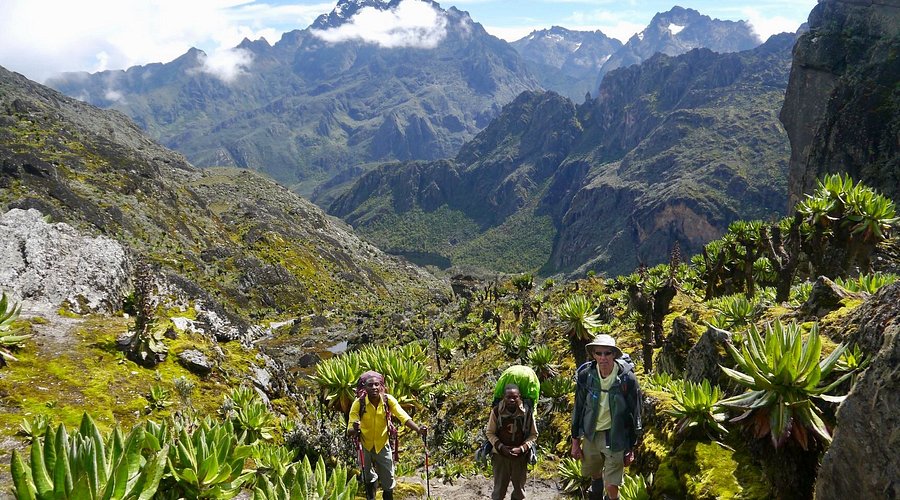
9. Rwenzori Mountains National Park
The Rwenzori Mountains offer a completely different side of Uganda.
This is a destination for hikers, mountaineers, photographers, and adventure travelers.
The landscape includes forests, waterfalls, valleys, alpine vegetation, and spectacular mountain scenery.
A Rwenzori trek can be combined with a western Uganda wildlife safari for travelers with more time.
Wildlife You Can See on a Uganda Safari – A Complete Uganda Wildlife Travel Guide
One of the most exciting parts of planning a Uganda safari is knowing how many different species you may encounter.
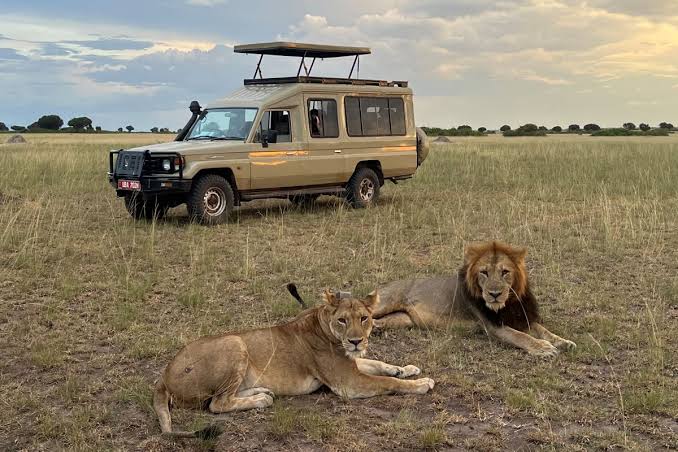
Lions
Lions can be found in several Ugandan savannah parks.
Queen Elizabeth and Murchison Falls are among the popular destinations for searching for these iconic predators, while Kidepo offers another exceptional lion-viewing environment.
Leopards
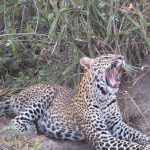
Leopards are more elusive than lions.
They are often difficult to spot because they are solitary, well camouflaged, and frequently active around dawn, dusk, or at night.
A leopard sighting is therefore one of the most exciting moments of any game drive.
Elephants
African elephants are found in several Ugandan parks.
Seeing a herd moving across the savannah, feeding near a river, or gathering around water is one of the classic African safari experiences.
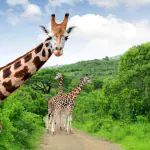
Giraffes
Giraffes are especially associated with destinations such as Murchison Falls, Kidepo, and Lake Mburo.
Their height makes them relatively easy to identify from a distance.
Buffaloes
African buffaloes are widespread across several Ugandan protected areas.
They are commonly seen in herds and can often be found near water or grazing areas.
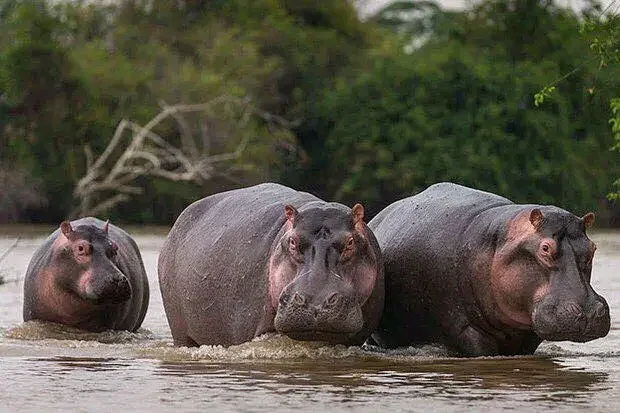
Hippos
Hippos are especially easy to see during boat safaris.
The Nile and Kazinga Channel offer excellent opportunities to observe these enormous animals from the water.
Zebras
Lake Mburo is particularly well known for zebras.
Kidepo also provides opportunities to see zebras in its open landscapes.
Uganda’s Primate Experiences – A Complete Uganda Wildlife Travel Guide
Uganda is particularly special because it combines classic wildlife with outstanding primate experiences.
The country is home to:
- Mountain gorillas
- Chimpanzees
- Golden monkeys
- Colobus monkeys
- Red-tailed monkeys
- Blue monkeys
- Baboons
- Mangabeys
If primates are a major reason for your trip, consider combining Kibale with Bwindi or Mgahinga.
This creates a journey that includes both chimpanzee and gorilla experiences.
Best Wildlife Activities in Uganda
Game Drives
Game drives are the foundation of a traditional Uganda safari.
They allow you to explore large areas and search for wildlife with the help of an experienced guide.
Early morning drives are often excellent because temperatures are cooler and many animals are active.
Late-afternoon drives can also be rewarding as temperatures fall and wildlife becomes more active again.
Boat Safaris – A Complete Uganda Wildlife Travel Guide
Boat safaris offer a unique perspective.
Instead of looking for animals from a vehicle, you observe wildlife from the water.
Murchison Falls and Queen Elizabeth are two of the most popular destinations for boat experiences.
Gorilla Trekking
Gorilla trekking is one of Uganda’s most sought-after wildlife experiences.
It requires physical effort, but the reward is the opportunity to observe mountain gorillas in their natural habitat.
Chimpanzee Tracking
Chimpanzee tracking is ideal for travelers who enjoy walking and rainforest exploration.
Kibale is the most famous destination for this experience.
Bird Watching
Uganda’s diverse habitats make it an excellent destination for birding.
Even travelers who are not dedicated birdwatchers can enjoy seeing colorful and unusual species during game drives and nature walks.
Nature Walks
Walking allows you to experience the smaller details of the environment.
You can look for tracks, insects, plants, birds, primates, and other signs of wildlife.
Cultural Experiences
A safari can also introduce you to Uganda’s people and cultures.
Community experiences can include traditional music and dance, local food, crafts, storytelling, village visits, and learning about everyday life.
Best Time to Visit Uganda for Wildlife – A Complete Uganda Wildlife Travel Guide
Uganda is a year-round safari destination.
However, the relatively dry periods are often preferred by travelers because wildlife viewing and road conditions can be more favorable.
The wetter months also have their advantages.
The countryside becomes beautifully green, waterfalls and rivers can be spectacular, and birding can be excellent.
For gorilla and chimpanzee trekking, rain can occur at any time because these experiences take place in rainforest environments.
The best time to visit therefore depends on your priorities.
If your main goal is traditional game viewing, consider the drier periods.
If you are interested in lush scenery, fewer visitors, and bird watching, the wetter periods can also be rewarding.
How Long Should a Uganda Safari Be?
The ideal safari length depends on how many destinations you want to visit.
3 to 4 Days
Ideal for a short wildlife getaway.
Lake Mburo or Murchison Falls can work well depending on your starting point.
5 to 7 Days
Suitable for travelers who want a combination of wildlife and primates.
Possible combinations include:
Kibale + Queen Elizabeth
or
Murchison Falls + Kibale
8 to 10 Days
A longer itinerary allows you to combine several destinations without rushing.
A popular route can include:
Kibale → Queen Elizabeth → Bwindi → Lake Mburo
12 to 14 Days
With two weeks, you can explore western Uganda more thoroughly and include several wildlife activities.
You can also consider adding cultural experiences or additional time for bird watching.
14 Days or More
Travelers with more time can consider adding Kidepo Valley, Semuliki, Rwenzori Mountains, or Mount Elgon.
Domestic flights can also be considered when visiting remote areas.
Sample 7-Day Uganda Wildlife Safari – A Complete Uganda Wildlife Travel Guide
A seven-day safari can provide a good introduction to western Uganda.
Day 1: Arrival in Entebbe and transfer
Day 2: Travel to Kibale National Park
Day 3: Chimpanzee tracking and Bigodi experience
Day 4: Travel to Queen Elizabeth National Park
Day 5: Morning game drive and Kazinga Channel boat cruise
Day 6: Travel toward Bwindi
Day 7: Gorilla trekking or departure, depending on the itinerary
For a more relaxed experience, additional days should be added.
Sample 10-Day Uganda Wildlife and Gorilla Safari
Day 1: Arrival in Entebbe
Day 2: Entebbe to Kibale National Park
Day 3: Chimpanzee tracking
Day 4: Kibale to Queen Elizabeth National Park
Day 5: Game drive and Kazinga Channel cruise
Day 6: Queen Elizabeth to Bwindi
Day 7: Gorilla trekking
Day 8: Bwindi nature or cultural experience
Day 9: Bwindi to Lake Mburo
Day 10: Lake Mburo wildlife experience and return toward Entebbe
This itinerary provides a strong combination of big-game viewing, chimpanzees, gorillas, boat safaris, and beautiful scenery.
How Much Does a Uganda Wildlife Safari Cost? – A Complete Uganda Wildlife Travel Guide
There is no fixed price for a Uganda safari.
The final cost depends on several factors, including:
- Number of travelers
- Number of safari days
- Accommodation category
- Type of safari vehicle
- Private or shared travel
- Park entrance fees
- Gorilla permits
- Chimpanzee permits or activities
- Boat cruises
- Domestic flights
- Meals
- Travel season
- Additional activities
Budget Safaris
Budget trips generally use simple accommodation and focus on keeping transportation and lodging costs low.
Mid-Range Safaris
Mid-range safaris provide comfortable lodges, private transportation, professional guiding, and a good balance between comfort and cost.
Luxury Safaris
Luxury safaris focus on premium accommodation, private experiences, personalized service, and a higher level of comfort.
For an accurate quotation, travelers should provide their travel dates, number of people, preferred accommodation level, and activities they want to include.
Where to Stay on a Uganda Safari – A Complete Uganda Wildlife Travel Guide
Uganda offers accommodation for different travel styles and budgets.
Options include:
- Safari lodges
- Luxury tented camps
- Mid-range lodges
- Budget camps
- Guesthouses
- Boutique accommodation
Location is just as important as the quality of the property.
Staying close to the national park can reduce driving time and allow you to start activities earlier.
Luxury travelers may also choose lodges based on their views, food, privacy, service, and overall experience.

Getting Around Uganda
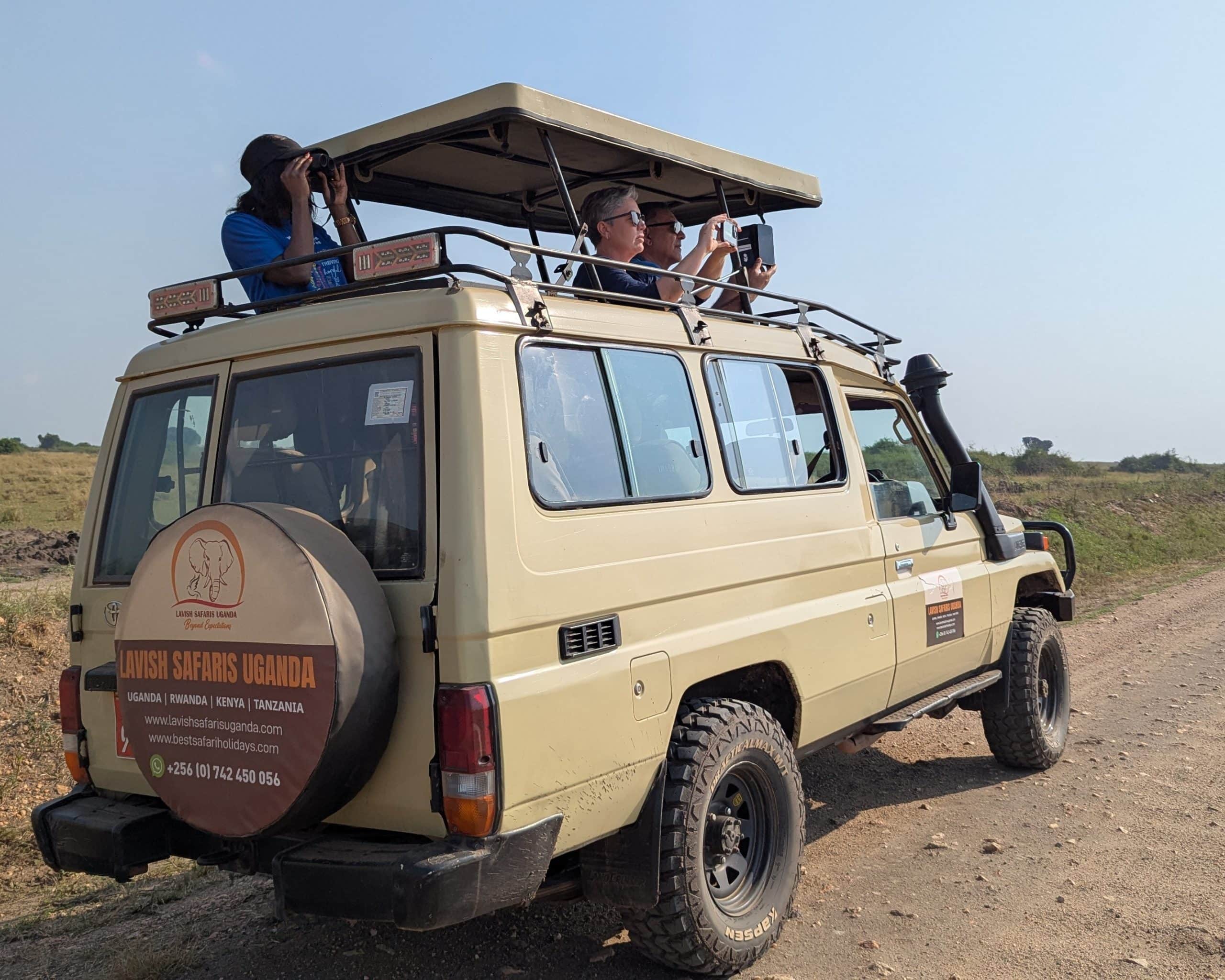
Most safari travelers explore Uganda by road using a comfortable 4×4 safari vehicle.
Road travel allows you to experience Uganda’s countryside, villages, farms, forests, and changing landscapes along the way.
For remote destinations or travelers with limited time, domestic flights can reduce long driving distances.
A good safari operator can recommend the best combination of road travel and flights based on your itinerary.
What to Pack for a Uganda Wildlife Safari – A Complete Uganda Wildlife Travel Guide
Packing correctly will make your trip more comfortable.
Essential Clothing
Bring:
- Lightweight trousers
- Long-sleeved shirts
- T-shirts
- Comfortable walking clothes
- Warm sweater or fleece
- Waterproof jacket
- Comfortable walking shoes
- Sturdy hiking boots
- Hat or cap
Neutral-colored clothing is generally practical for wildlife viewing.
Safari Essentials
You should also consider packing:
- Binoculars
- Camera
- Extra batteries
- Memory cards
- Power bank
- Sunscreen
- Sunglasses
- Insect repellent
- Reusable water bottle
- Small backpack
- Personal toiletries
Gorilla Trekking Equipment – A Complete Uganda Wildlife Travel Guide
If gorilla trekking is part of your itinerary, consider adding:
- Waterproof hiking boots
- Long trousers
- Long-sleeved shirt
- Rain jacket
- Gardening or trekking gloves
- Waterproof trousers
- Small daypack

Health and Safety Tips
Before traveling to Uganda, consult a qualified travel-health professional about recommended vaccinations, malaria prevention, and other health requirements relevant to your personal circumstances.
During the safari, always follow the instructions of your guide and park authorities.
Wild animals are unpredictable.
Never approach animals on foot unless you are accompanied by an authorized guide and have been told it is safe.
During game drives, remain inside the vehicle unless your guide has specifically indicated that it is safe to leave.
Responsible Wildlife Tourism – A Complete Uganda Wildlife Travel Guide
Responsible tourism helps protect Uganda’s wildlife for future generations.
As a visitor, you can contribute by following simple principles.
Respect Wildlife
Do not feed animals or attempt to attract them for photographs.
Follow Park Rules
Park regulations exist to protect both wildlife and visitors.
Avoid Littering
Carry waste with you until you can dispose of it properly.
Respect Local Communities
Ask permission before photographing people and respect local traditions.
Support Local Businesses
Buying locally made crafts, using community services, and choosing responsible tourism operators can help tourism benefits reach local communities.
Uganda Safari Photography Tips – A Complete Uganda Wildlife Travel Guide
Uganda offers exceptional opportunities for wildlife photography.
To improve your photographs:
- Carry extra batteries and memory cards.
- Use a telephoto lens when possible.
- Keep your camera ready during game drives.
- Be patient.
- Avoid making sudden movements around wildlife.
- Listen to your guide.
- Photograph animals in natural behavior rather than trying to force a particular shot.
Early morning and late afternoon light can create beautiful conditions for photography.
Practical Tips for First-Time Visitors
Plan Your Route Carefully
Uganda is larger than it may appear on a map.
Avoid creating an itinerary that spends most of the trip on the road.
Don’t Rush Wildlife Experiences – A Complete Uganda Wildlife Travel Guide
Give yourself enough time in each park.
Wildlife sightings are unpredictable, and spending more time in a destination generally gives you more opportunities to experience the environment.
Choose Accommodation Wisely
The cheapest lodge is not always the best choice.
Consider location, comfort, meals, service, and accessibility.
Travel With an Experienced Guide – A Complete Uganda Wildlife Travel Guide
A knowledgeable guide can identify animals, explain their behavior, find wildlife, navigate the parks, and make the safari more enjoyable.
Leave Flexibility in Your Schedule
Unexpected wildlife sightings and changing road conditions can affect the timing of your day.
A little flexibility makes the journey less stressful.
Why Choose Lavish Safaris Uganda?
Planning a complete Uganda wildlife safari can be complicated when you are unfamiliar with the country’s parks, roads, accommodation options, and activities.
Lavish Safaris Uganda can help travelers create tailor-made safari experiences based on their interests, travel dates, budget, and preferred level of comfort.
Whether you want a classic wildlife safari, a gorilla trekking adventure, a chimpanzee experience, a luxury holiday, a family safari, a birding trip, or a combination of several experiences, your itinerary can be designed around what matters most to you.
A carefully planned safari can include transportation, accommodation, park activities, professional guiding, permits, boat cruises, and other experiences required for a smooth journey.
Final Thoughts: Discover Uganda’s Wildlife – A Complete Uganda Wildlife Travel Guide
Uganda is a destination where every journey can become a story.
You can begin your adventure watching giraffes and elephants across a golden savannah. Later, you can cruise along the Nile surrounded by hippos and crocodiles.
Another day may take you deep into a rainforest to search for chimpanzees.
Then, in the misty mountains of southwestern Uganda, you may come face-to-face with a family of mountain gorillas.
This combination of wildlife, rainforest, primates, rivers, lakes, mountains, birds, culture, and adventure is what makes Uganda unique.
A complete Uganda wildlife safari is not simply about seeing as many animals as possible. It is about experiencing different ecosystems, understanding the country’s conservation story, meeting its people, and discovering the landscapes that make Uganda one of Africa’s most fascinating destinations.