

Ziwa Rhino Sanctuary is Uganda’s premier destination for seeing southern white rhinos on foot. Located in Nakasongola District along the Kampala–Gulu highway, the sanctuary combines guided rhino tracking with birding, nature walks and other wildlife experiences. We recommend Ziwa as a rewarding standalone day trip or as a strategic stop on a Murchison Falls safari.
At Lavish Safaris Uganda, we see Ziwa Rhino Sanctuary as more than a place to tick rhinos off your wildlife list.
It is a conservation story.
Uganda once supported wild rhinos across several regions. Poaching, insecurity and habitat loss eventually eliminated rhinos from the country’s wild landscapes. The last confirmed rhino in Kidepo Valley was killed in 1983. (Uganda Tourism Board)
The recovery began through deliberate conservation efforts.
Ziwa became the centre of Uganda’s rhino breeding programme, helping rebuild a population that can now support reintroduction into suitable protected areas. In January 2026, Uganda moved four southern white rhinos from Ziwa to Ajai Wildlife Reserve. In March 2026, another phase began with rhinos returning to Kidepo Valley National Park. (Uganda Tourism Board)
So when we take you tracking at Ziwa, you are not simply watching a magnificent animal.
You are experiencing one of Uganda’s most important wildlife recovery stories.
Visit Ziwa Rhino Sanctuary to track southern white rhinos on foot with trained guides, learn about Uganda’s rhino conservation programme and enjoy additional wildlife and birding experiences. Its location also makes it an excellent stop between Kampala and Murchison Falls National Park.
Ziwa offers something that conventional game drives cannot always provide.
Then, when your ranger locates the animals, you approach carefully on foot.
That creates a much more intimate wildlife encounter.
The Uganda Tourism Board identifies Ziwa as the place where visitors can see Uganda’s wild rhinos and highlights rhino tracking, birdwatching and nature walks among its experiences. (tourismuganda.org)
We particularly recommend Ziwa for travellers who:
Ziwa Rhino Sanctuary lies in Nakasongola District, approximately 176 kilometres north of Kampala along the Kampala–Gulu highway. The sanctuary is accessed near Nakitoma and sits on the route commonly used for safaris to Murchison Falls National Park. (tourismuganda.org)
Its position is one of its biggest advantages.
You do not need to make a major detour from a northern Uganda safari.
A typical route is:
Kampala → Ziwa Rhino Sanctuary → Murchison Falls National Park
This makes Ziwa particularly convenient for a Murchison Falls and rhino safari.
Depending on your itinerary and road conditions, we can also arrange Ziwa as a standalone excursion from Kampala.
| Feature | Details |
| Location | Nakasongola District, Central Uganda |
| Approximate distance from Kampala | 176 km |
| Main attraction | Southern white rhinos |
| Main experience | Guided rhino tracking |
| Other experiences | Birding, nature walks and other wildlife activities |
| Famous bird | Shoebill |
| Best combination | Murchison Falls National Park |
| Habitat | Grassland, woodland, thickets and wetland habitats |
| Conservation role | Rhino breeding, protection and restoration |
| Ideal for | Wildlife lovers, photographers, families and safari travellers |
Note: wildlife numbers and management arrangements can change as Uganda’s national rhino restoration programme progresses. We recommend confirming current sanctuary conditions when booking.
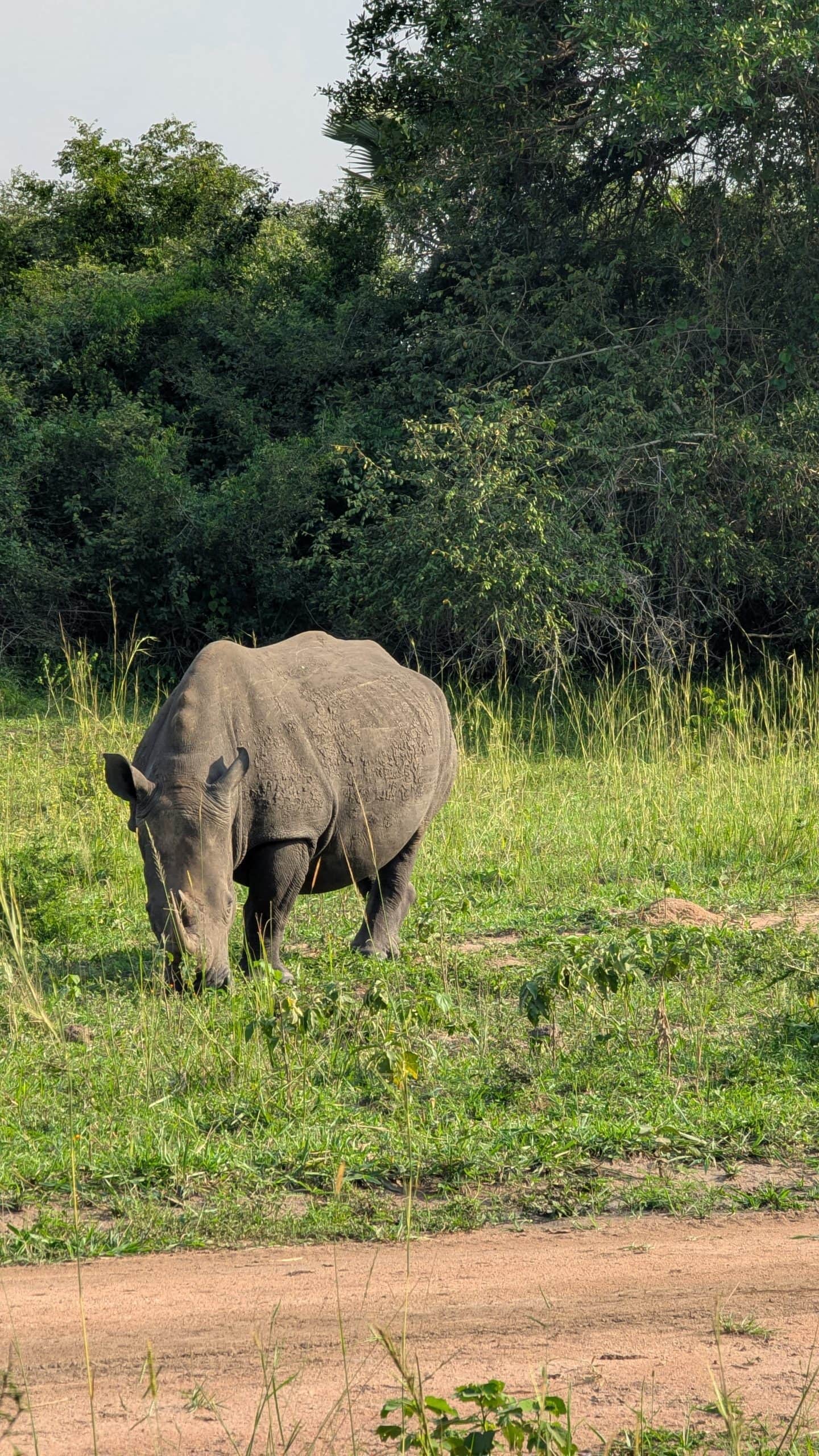
Ziwa Rhino Sanctuary was established as part of Uganda’s effort to restore rhinos after their disappearance from the country’s wild landscapes. Breeding began at Ziwa in 2005–2006, building from a founder population of six southern white rhinos.
The story is important because Uganda historically had both northern white rhinos and eastern black rhinos.
Decades of insecurity and poaching devastated these populations.
Uganda’s last confirmed wild rhino was killed in Kidepo Valley in 1983. (Uganda Tourism Board)
The recovery programme eventually established Ziwa as a secure breeding centre.
The original founder population comprised six southern white rhinos. According to Uganda Wildlife Authority and Uganda Tourism Board, the breeding programme subsequently produced significant population growth. (Uganda Tourism Board)
Then came a major development.
In December 2025, Uganda received eight additional southern white rhinos from South Africa to strengthen the country’s conservation programme. (Uganda Tourism Board)
In 2026, Ziwa became the source of rhinos being returned to former habitats.
The conservation story has therefore moved from breeding to restoration.
Uganda’s wild rhinos disappeared because of prolonged poaching, insecurity and habitat pressures, with the last confirmed wild rhino killed in Kidepo Valley in 1983. Conservation programmes later began rebuilding the population through managed breeding and reintroduction efforts. (Uganda Tourism Board)
Historically, rhinos occupied parts of northern and northeastern Uganda.
The northern white rhino occurred west of the Albert Nile.
The eastern black rhino occurred across areas east of the Albert Nile and north of the Victoria Nile.
By the early 1980s, both had disappeared from Uganda’s wild landscapes. (Uganda Tourism Board)
The story is now changing.
Southern white rhinos bred at Ziwa are being used to restore rhinos to selected protected areas.
In January 2026, four southern white rhinos were moved from Ziwa to Ajai Wildlife Reserve.
In March 2026, Uganda began another historic translocation, moving southern white rhinos from Ziwa toward Kidepo Valley National Park. (Uganda Tourism Board)
This gives your visit genuine conservation significance.
Rhino tracking is the signature experience at Ziwa Rhino Sanctuary. You leave the vehicle and walk with a trained sanctuary ranger, following rhino movements through the sanctuary until you find the animals.
This is not a conventional game drive.
There is no guarantee that a rhino will be standing beside a road.
Instead, you participate in the search.
Your ranger reads:
The walk can take different amounts of time depending on where the rhinos are located and the conditions on the day.
That uncertainty is part of the adventure.
Then suddenly, the vegetation opens.
You see a massive white rhino grazing.
The ranger signals for you to stop.
You watch.
The animal continues feeding.
For many travellers, that first encounter on foot becomes the highlight of their Ziwa visit.
Ziwa rhino tracking is an active walking experience rather than a vehicle-based game drive. You follow a trained ranger through the sanctuary and may walk across grassland, woodland and other habitats while looking for rhino signs.
We recommend treating it like a light walking safari.
Wear:
The terrain can vary.
Some sections may be easy.
Others can involve uneven ground or thicker vegetation.
Your ranger determines the safest approach based on the rhinos’ location and behaviour.
Your ranger controls the approach distance based on the rhinos’ behaviour, terrain and safety conditions. Visitors should never approach, surround, touch or attempt to attract a rhino.
This is one of the most important differences between responsible wildlife viewing and ordinary sightseeing.
A rhino may appear calm.
That does not mean it is comfortable with a close approach.
We therefore follow the ranger’s instructions at all times.
Never:
The best wildlife encounter is one where the animal remains relaxed.
Rhino tracking can be conducted safely when visitors follow the sanctuary’s ranger instructions and remain with their guide. Rhinos are powerful wild animals, so maintaining discipline, silence and appropriate positioning is essential throughout the experience.
Your ranger knows how rhinos behave.
They also understand the terrain.
If an animal becomes uncomfortable, your group follows the ranger’s instructions immediately.
We recommend that travellers:
Safety takes priority over getting a photograph.
The rhinos at Ziwa are southern white rhinos, a subspecies of white rhinoceros that forms the foundation of Uganda’s current rhino restoration programme.
There is an important distinction here.
Uganda historically had the northern white rhino.
The animals currently being used in Uganda’s restoration programme are southern white rhinos.
Uganda Wildlife Authority explains that the southern white rhino is not the indigenous Ugandan subspecies, but its use follows the principle of conservation equivalence because northern and southern white rhinos historically belonged to the same species before their separation. (Uganda Tourism Board)
We believe explaining this distinction makes the experience more trustworthy.
Ziwa’s greatest importance lies in conservation: protecting a breeding population of rhinos while supporting Uganda’s wider strategy to rebuild and restore rhino populations in suitable landscapes.
The programme has now entered an exciting new stage.
For years, Ziwa concentrated on:
Protection → Breeding → Population Growth
Uganda is increasingly moving toward:
Protection → Breeding → Translocation → Restoration
The 2026 movements to Ajai Wildlife Reserve and Kidepo Valley National Park demonstrate that transition. (Uganda Tourism Board)
This makes Ziwa more than a tourism destination.
It is part of Uganda’s national wildlife recovery story.
Rhinos are important because they are large herbivores that shape ecosystems, while their survival also represents decades of conservation investment and the restoration of wildlife populations lost from Uganda.
Rhinos face severe threats across Africa, especially from illegal wildlife trafficking and poaching.
Their recovery requires:
Your visit contributes to a tourism economy built around protecting wildlife rather than exploiting it.
That is one reason we encourage travellers to include Ziwa in their Uganda itinerary.
Rhinos are the headline attraction, but Ziwa’s habitats also support other mammals, reptiles and an impressive range of birdlife.
Depending on the season and location, wildlife sightings may include:
Tourism Uganda also highlights Ziwa’s bird diversity and mentions species including the shoebill and grey crowned crane. (tourismuganda.org)
The wildlife variety makes Ziwa worth visiting even for travellers who have already seen rhinos elsewhere in Africa.
Ziwa is also a worthwhile birding destination, with woodland, grassland and wetland habitats supporting a diverse bird community. The sanctuary is particularly known for opportunities to search for the shoebill.
For serious birders, we recommend allowing extra time.
Rather than rushing through a rhino trek and leaving immediately, consider combining your visit with a dedicated birding experience.
Potential sightings can include:
Published sources give different bird totals depending on survey dates and counting methods, so we avoid promising a fixed number of species.
Bird populations change with seasons and habitat conditions.
The shoebill is one of Ziwa’s most sought-after birds, and the sanctuary’s wetlands provide opportunities to search for this prehistoric-looking species.
Shoebills are not guaranteed.
That matters.
They are wild birds.
Weather, water levels, vegetation and bird movement all influence sightings.
We therefore recommend booking a dedicated birding experience if the shoebill is one of your primary reasons for visiting.
For bird photographers, early starts can be especially rewarding.
Guided nature walks provide another way to explore Ziwa’s woodland, grassland and wetland habitats while learning about plants, wildlife signs and the sanctuary’s conservation work.
A nature walk is slower than a conventional safari.
You notice:
It is particularly useful for travellers who enjoy ecology and photography.
Night walks can reveal a different side of Ziwa, with nocturnal wildlife becoming active after sunset. Availability and operating arrangements can vary, so we recommend confirming the current programme when booking.
The sanctuary’s daytime landscape changes dramatically after dark.
Sounds become more important than distant views.
You may encounter nocturnal species that remain hidden during the day.
We only recommend participating through the sanctuary’s authorised guides and following all current safety requirements.
Ziwa’s wetland areas can provide opportunities for canoe-based exploration, particularly for travellers interested in birds and aquatic habitats.
A canoe experience can complement rhino tracking beautifully.
The morning might begin with:
Rhino tracking on foot.
Then later:
Wetland exploration by canoe.
This gives you two completely different perspectives on the sanctuary.
Birdwatchers can combine rhino tracking with dedicated birding around Ziwa’s wetlands, woodland and grassland habitats.
For serious birders, we recommend:
Birding is often about waiting.
A good guide can make the difference between seeing movement in the reeds and identifying the species responsible.
Ziwa offers excellent wildlife photography opportunities because rhino tracking gets you out of the vehicle and closer to the natural rhythms of the animals.
A camera with a moderate telephoto lens is useful.
We also recommend carrying:
Do not prioritise the perfect photograph over ranger instructions.
Wildlife photography should never change wildlife behaviour.
Ziwa can be an excellent family safari stop, particularly for older children who can manage a guided walking experience and follow wildlife-safety instructions.
Children can learn about:
We recommend discussing your children’s ages with us before booking so we can plan the experience appropriately.
Couples can add Ziwa Rhino Sanctuary to a luxury Uganda honeymoon for an intimate wildlife experience that combines walking, conservation and photography.
Imagine beginning the day tracking rhinos on foot.
Then returning to your lodge for lunch.
Later, relax in the wilderness.
The experience works particularly well when combined with:
Ziwa + Murchison Falls + Kibale + Queen Elizabeth + Bwindi.
This creates a honeymoon combining:
Rhinos + Big Five + Chimpanzees + Gorillas.
Ziwa is especially valuable for travellers seeking Uganda’s complete Big Five story because rhinos are not normally encountered in Uganda’s national parks in the same way as lions, elephants, buffalo and leopards.
Uganda Tourism Board specifically notes that rhinos are hosted at Ziwa in the context of Uganda’s Big Five experience. (tourismuganda.org)
This gives you opportunities to search for:
Sightings are never guaranteed because these are wild animals.
But the itinerary creates a strong opportunity to experience Uganda’s major large mammal safari species.
and Murchison Falls
Ziwa is one of the best additions to a Murchison Falls safari because it lies along the Kampala–Murchison route and provides a completely different wildlife experience before entering
the national park.
Travellers with more time can combine Ziwa with Murchison Falls and Kibale Forest for an itinerary covering rhinos, savanna wildlife, chimpanzees and forest biodiversity.
Ziwa Rhino Sanctuary can be visited throughout the year, but the drier periods are generally more comfortable for walking and wildlife activities. Uganda’s commonly recognised drier periods are December–February and June–September, although rainfall remains possible at any time. (tourismuganda.org)
Generally drier.
Good conditions for walking.
Popular safari period.
Generally drier.
Warm conditions.
Good for combining Ziwa with northern Uganda.
Rainfall increases.
The landscape becomes greener.
Fewer visitors can be an advantage.
Another wetter period.
Vegetation becomes lush.
Birding can remain rewarding.
We recommend travelling when it fits your overall Uganda itinerary rather than choosing dates based solely on Ziwa.
We recommend allowing at least half a day for rhino tracking, while a full day is better if you want to combine rhinos with birding, nature walks or other activities.
Half day
Rhino tracking.
Full day
Rhino tracking + birding.
Overnight
Rhino tracking + birding + additional nature experiences.
If you are travelling to Murchison Falls, we can integrate Ziwa without making your safari unnecessarily long.
Yes. Ziwa Rhino Sanctuary can be visited as a long day trip from Kampala, although we often recommend incorporating it into a longer northern Uganda safari to reduce driving fatigue and improve the overall experience.
The sanctuary is approximately 176 km from Kampala. (tourismuganda.org)
A private vehicle allows us to control:
For travellers who prefer slower journeys, an overnight stay can be more comfortable.
Travellers can stay near the sanctuary when they want a slower wildlife experience rather than simply stopping for a few hours between Kampala and Murchison Falls.
Accommodation options and operating arrangements can change.
For that reason, we recommend selecting your lodge based on:
We can arrange accommodation as part of your complete Uganda safari rather than treating it separately.
Pack lightweight, comfortable safari clothing, closed walking shoes, sun protection, insect repellent, water and a camera because rhino tracking takes place on foot.
Add:
Wear comfortable, lightweight clothing suitable for walking through grassland and woodland, preferably in neutral safari colours such as khaki, brown or green.
Avoid clothing that is:
A light rain jacket is useful because Uganda’s weather can change.
Ziwa’s activity costs can change, so we recommend confirming the current sanctuary rates when planning your safari rather than publishing outdated prices.
Your safari quotation can clarify which costs are included.
Depending on the itinerary, these may include:
This approach is more transparent than quoting an old activity fee that may no longer apply.
Yes, especially if you want to see rhinos in Uganda, experience wildlife tracking on foot or understand the country’s remarkable rhino recovery programme. Its location also makes it particularly worthwhile on a Murchison Falls safari.
We would prioritise Ziwa for:
Wildlife enthusiasts: ★★★★★
Conservation travelers: ★★★★★
Photographers: ★★★★★
Birdwatchers: ★★★★☆
Families: ★★★★☆
Luxury travellers: ★★★★☆
Travellers with very limited time: ★★★☆☆
The experience becomes even stronger when you allow enough time rather than treating it as a rushed roadside stop.
Ziwa differs because the main wildlife experience happens on foot rather than from a safari vehicle, giving you a closer understanding of animal tracking, ranger work and rhino behaviour.
At Murchison Falls, you might watch an elephant herd from a 4×4.
At Ziwa, you follow footprints through vegetation.
It feels less like sightseeing and more like tracking.
Responsible tourism at Ziwa means following ranger instructions, keeping wildlife encounters respectful, avoiding litter, supporting conservation and recognising that the rhinos’ welfare comes before photography or sightseeing.
We encourage every guest to:
The sanctuary’s importance goes beyond tourism.
Uganda’s rhino restoration programme now involves active translocation and long-term population recovery. (Uganda Tourism Board)
A visit to Ziwa connects travellers directly with one of Uganda’s most significant wildlife restoration programmes, which has progressed from establishing a breeding population to returning rhinos to former habitats.
In 2026 alone, rhinos from Ziwa were moved to:
That means the sanctuary’s role is changing.
It remains an important protected breeding population.
But its success now helps Uganda rebuild rhino populations beyond Ziwa.
Your visit becomes part of a much larger conservation story.

Ziwa is famous for rhino conservation and guided encounters with southern white rhinos. It is one of Uganda’s most important destinations for rhino tourism and restoration.
It is in Nakasongola District, approximately 176 km north of Kampala along the Kampala–Gulu highway. (tourismuganda.org)
Yes. Ziwa is the principal place in Uganda where visitors can see the country’s rhinos in a protected natural setting. (Ziwarhino)
The sanctuary’s rhinos are southern white rhinos.
Yes. Rhino tracking is the sanctuary’s signature visitor experience.
The duration varies according to the location of the rhinos, terrain and conditions. We recommend allowing at least half a day for the experience.
No. Ziwa is a rhino sanctuary/wildlife ranch, rather than one of Uganda’s national parks.
Yes. It can be arranged as a standalone excursion from Kampala or Entebbe.
Yes. This is one of the best ways to include Ziwa in a Uganda safari.
Ziwa’s key attraction is rhino conservation. It is not a conventional Big Five game-drive destination. We recommend combining it with national parks such as Murchison Falls or Queen Elizabeth for a broader large-mammal safari.
Yes. The sanctuary contains wetland, woodland and grassland habitats and offers opportunities for birding, including searches for the shoebill. (tourismuganda.org)
You can search for one, but sightings are never guaranteed because shoebills are wild birds.
It can be, particularly for children who can comfortably walk and follow wildlife-safety instructions. Tell us the children’s ages when booking.
Wear comfortable walking shoes, lightweight trousers, a shirt, hat, sunscreen and insect repellent. A light rain jacket is useful.
Ziwa can be visited throughout the year. The generally drier periods of June–September and December–February are often more comfortable for walking. (tourismuganda.org)
Yes. Ziwa has played a central role in Uganda’s rhino breeding and restoration programme. Rhinos from Ziwa have now been translocated to other protected areas. (Uganda Tourism Board)
They live in a protected sanctuary environment rather than an unfenced national park. However, they are not domestic animals and must be treated as wild wildlife.
No. Never attempt to touch or feed a rhino.
Absolutely. We especially recommend it when travelling between Kampala and Murchison Falls.
Ziwa Rhino Sanctuary gives you a rare opportunity to experience Uganda’s rhinos on foot while witnessing a conservation programme that is helping return these remarkable animals to landscapes where they once disappeared.
We can include Ziwa in:
You can visit for a few hours.
Or you can slow down and spend longer exploring the sanctuary.
We will build the itinerary around your interests, travel dates and safari style.
Contact Lavish Safaris Uganda and let us design your Ziwa Rhino Sanctuary experience.