
Discover the Famous Lions of Queen Elizabeth National Park
Tree-Climbing Lions in Uganda: Discover the Famous Lions of Queen Elizabeth National Park. Uganda is one of Africa’s most remarkable safari destinations, offering extraordinary wildlife encounters, breathtaking landscapes, and unforgettable nature experiences. Among its many attractions, the tree-climbing lions of Queen Elizabeth National Park stand out as one of the country’s most fascinating wildlife spectacles.
Unlike many lions across Africa that spend most of their time resting on the ground, the famous lions of Uganda have developed a remarkable habit of climbing trees. Visitors travelling to the southern Ishasha sector of Queen Elizabeth National Park have an opportunity to witness these magnificent predators resting on the branches of large fig trees, enjoying the shade, and observing their surroundings from above.
Seeing a lion resting comfortably on a tree branch is an unusual and memorable experience. It offers a different perspective on the behaviour of African lions and makes Uganda an exceptional destination for wildlife enthusiasts, photographers, and safari travellers.
Whether you are planning a luxury Uganda safari, a family wildlife holiday, or an adventurous African safari, encountering the tree-climbing lions is an experience worth including in your travel itinerary.
Discovering Uganda’s Tree-Climbing Lions -Tree-Climbing Lions Uganda

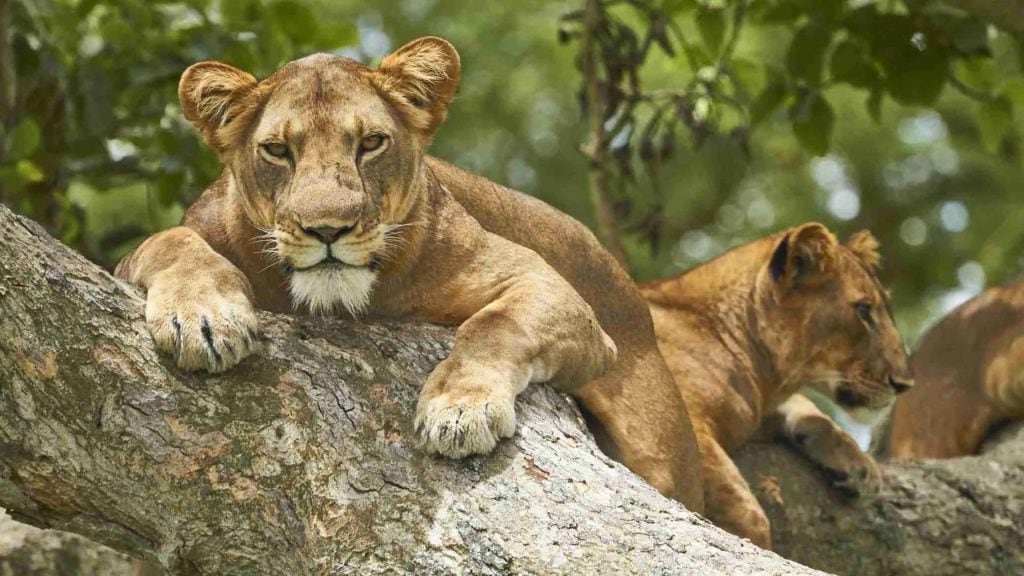
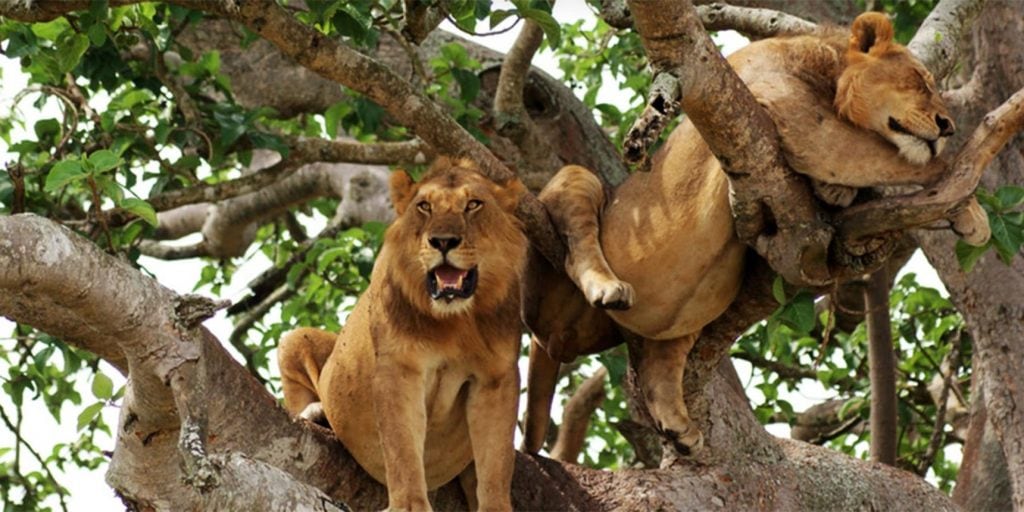
Tree-climbing lions are among the most famous wildlife attractions in Uganda. They are particularly associated with the Ishasha sector, located in the southern part of Queen Elizabeth National Park in western Uganda.
The area is internationally recognised for its population of lions that frequently climb and rest in trees. This behaviour makes the Ishasha lions different from the typical image of lions resting beneath trees or lying on open grasslands.
During a safari, visitors may encounter individual lions or several members of a pride resting on the branches of large fig trees. Sometimes, they can be seen stretching across thick branches, sleeping in the shade, or looking down at the surrounding savannah.
The experience is particularly exciting because tree-climbing is not a behaviour commonly associated with lions in most African safari destinations.
Ishasha’s open grasslands, scattered trees, seasonal vegetation, and rich wildlife populations create a beautiful environment for exploring this unique behaviour.
Where to See Tree-Climbing Lions in Uganda

The best-known destination for seeing tree-climbing lions in Uganda is the Ishasha sector of Queen Elizabeth National Park.
Located in the southern section of the park, Ishasha is characterised by extensive savannah grasslands, woodland vegetation, and scattered fig trees.
The sector is also close to the border with the Democratic Republic of the Congo, with the Ishasha River forming part of the international boundary.
Ishasha offers a different safari atmosphere from the northern section of Queen Elizabeth National Park. Its open landscapes and relatively quiet wilderness make it an excellent destination for wildlife viewing and photography.
The famous tree-climbing lions are often associated with large fig trees, where they can be spotted resting on branches during the day.
A visit to Ishasha provides opportunities to enjoy more than just lion sightings. The sector is also home to elephants, buffaloes, Uganda kobs, topis, and several bird species.
For travellers interested in experiencing Uganda’s wildlife beyond traditional game drives, Ishasha is an essential destination.
Why Do Lions in Uganda Climb Trees? – Tree-Climbing Lions Uganda

One of the most interesting questions visitors ask during an Ishasha safari is why these lions climb trees when most lions are commonly found resting on the ground.
Although tree-climbing behaviour is unusual among lions, it has been observed in certain populations in Africa, including those in Uganda.
Researchers and wildlife observers have suggested several possible reasons for this behaviour.
1. Escaping Heat and Enjoying the Shade
One possible explanation is that climbing trees allows lions to enjoy cooler and more comfortable resting places.
During the hot hours of the day, the branches of large trees may provide shade and airflow, helping lions avoid the heat of the open savannah.
By resting above the ground, lions can take advantage of cooler conditions and conserve energy for hunting and other activities.
2. Avoiding Insects on the Ground – Tree-Climbing Lions Uganda
Another possible explanation is that climbing trees may help lions avoid some of the insects found in the grass and vegetation.
Ground-level environments can contain numerous biting insects, particularly during certain seasons.
Resting on elevated branches may reduce exposure to some of these insects and provide a more comfortable resting environment.
3. Observing Their Surroundings
Trees also offer lions an elevated position from which they can observe the surrounding landscape.
From a strong branch, a lion may have a clearer view of nearby grasslands, wildlife movements, and potential disturbances.
This elevated position can be useful when monitoring the surrounding environment.
4. A Behaviour Passed Through Local Lion Populations – Tree-Climbing Lions Uganda
Tree-climbing behaviour may also be influenced by individual learning and social behaviour within local lion populations.
Young lions can observe and learn behaviours from older members of their pride.
However, scientists have not established one definitive explanation for why the Ishasha lions climb trees. The behaviour is likely influenced by several environmental and behavioural factors.
The Best Time to See Tree-Climbing Lions in Uganda
Planning your Ishasha wildlife safari
Tree-climbing lions can be spotted throughout the year in Ishasha. However, the chances of seeing them resting in trees may vary depending on weather conditions, temperatures, and their daily movements.
Dry Season: June to September and December to February – Tree-Climbing Lions Uganda
The dry season is generally an excellent time to visit Ishasha.
During these months, vegetation is often shorter, making it easier to spot wildlife across the open plains. The roads are also generally easier to navigate, allowing safari vehicles to explore different areas of the sector.
The warmer conditions may encourage lions to seek shade and cooler resting places in the branches of large trees.
Wet Season: March to May and October to November
The wet season transforms Ishasha into a beautiful green wilderness.
Although taller grass and muddy roads may sometimes make wildlife viewing more challenging, the landscape becomes particularly attractive for photography.
Birdwatching is also rewarding during this period, and visitors can enjoy the peaceful atmosphere of the park.
Tree-climbing lions remain an attraction throughout the rainy season, although sightings are never guaranteed.
Best Time of Day to See Tree-Climbing Lions – Tree-Climbing Lions Uganda
Timing your game drive can improve your chances of observing the famous lions of Ishasha.
Mid-morning to afternoon: This is often a productive period for searching for lions resting in fig trees. As temperatures rise, lions may seek shade and cooler conditions above the ground.
Early morning: Morning game drives provide opportunities to observe lions moving through the grasslands, returning from hunting activities, or resting beneath trees.
Late afternoon: The cooler temperatures may encourage lions to become more active as they prepare for their evening activities.
For the best experience, consider spending enough time in Ishasha to enjoy more than one game drive.
Game Drives in Ishasha: The Best Way to Discover Tree-Climbing Lions
Game drives are the main activity for visitors interested in seeing Uganda’s tree-climbing lions.
The experience takes place in a comfortable safari vehicle, accompanied by an experienced driver-guide who understands the area’s wildlife and landscape.
As you explore the open savannah, your guide will search for lions resting in fig trees, moving through the grasslands, or interacting with other members of their pride.
The search itself is part of the adventure. You may encounter herds of Uganda kobs, elephants, buffaloes, topis, and other wildlife along the way.
An experienced guide can help identify suitable trees and interpret animal behaviour, making the experience more educational and rewarding.
Game drives also provide excellent opportunities for wildlife photography, particularly when lions are resting on branches against the beautiful savannah landscape.
Other Wildlife to See in Ishasha Sector – Tree-Climbing Lions Uganda
Although tree-climbing lions are the main attraction, Ishasha offers much more than unusual lion behaviour.
Its diverse habitats support a variety of wildlife species, making it an excellent destination for a complete African safari.
1. Uganda Kobs
Uganda kobs are among the most frequently encountered antelopes in Ishasha.
They inhabit the open grasslands and are an important prey species for lions.
During a game drive, visitors can observe these elegant antelopes grazing in herds, moving across the plains, and gathering in suitable areas.
Their presence contributes to the rich wildlife environment that supports the Ishasha lion population.
2. African Elephants – Tree-Climbing Lions Uganda
African elephants are commonly encountered in Queen Elizabeth National Park, including the Ishasha sector.
These magnificent mammals move through the savannah and woodland habitats in search of food and water.
Visitors may encounter family groups, individual bulls, and herds feeding on vegetation.
Observing elephants in their natural environment adds another exciting dimension to an Ishasha safari.
3. African Buffaloes
African buffaloes are another important wildlife attraction in Ishasha.
They are frequently seen grazing in open grasslands and gathering in large herds.
Their powerful appearance and impressive horns make them fascinating animals to observe during a game drive.
4. Topis – Tree-Climbing Lions Uganda
Topis are among the characteristic antelopes of the Ishasha plains.
They are easily recognised by their reddish-brown coats and distinctive body shape.
These animals prefer open grassland habitats, where they can graze and watch for potential predators.
Seeing topis in their natural environment adds to the diversity of the Ishasha wildlife experience.
5. Hippopotamuses
The Ishasha River provides an important habitat for hippopotamuses.
Visitors may see hippos resting in the water or emerging along the riverbanks.
The riverine environment also attracts other wildlife and provides opportunities for birdwatching.
6. Birdlife – Tree-Climbing Lions Uganda
Ishasha is also an interesting destination for birdwatching.
Its combination of savannah grasslands, woodland vegetation, and riverine habitats supports numerous bird species.
Visitors may encounter African fish eagles, storks, herons, vultures, kingfishers, and other birds.
Birdwatching adds variety to the safari experience, especially for travellers interested in exploring Uganda’s rich biodiversity.
Photography Opportunities: Capturing Uganda’s Tree-Climbing Lions
Ishasha is one of the most exciting wildlife photography destinations in Uganda.
The sight of a lion resting on a large fig tree creates a unique photographic opportunity that is difficult to experience in many other African safari destinations.
Visitors can capture photographs of lions sleeping on branches, looking across the savannah, interacting with pride members, or climbing between branches.
To improve your photography experience, consider the following tips:
Carry a camera with a suitable telephoto or zoom lens.
Bring binoculars to locate lions resting high in the trees.
Take advantage of the soft natural light during morning and late-afternoon drives.
Be patient and allow time to observe animal behaviour.
Follow your guide’s instructions when positioning the safari vehicle.
Avoid disturbing wildlife in pursuit of photographs.
A good camera and an experienced safari guide can help you capture memorable images of these remarkable animals.
How to Get to Ishasha Sector in Queen Elizabeth National Park – Tree-Climbing Lions Uganda
Ishasha is located in southwestern Uganda, within the southern section of Queen Elizabeth National Park.
Travellers can reach the sector by road or domestic air transport, depending on their travel arrangements.
By Road from Kampala
The journey from Kampala to Ishasha takes several hours and passes through different landscapes of western Uganda.
Travellers can enjoy scenic views of countryside communities, rolling hills, agricultural areas, and beautiful natural scenery along the way.
Many visitors choose to include Ishasha as part of a longer Uganda safari rather than travelling directly for a single activity.
From Mweya and Kasenyi – Tree-Climbing Lions Uganda
Visitors exploring the northern section of Queen Elizabeth National Park can travel south to Ishasha.
The journey offers additional opportunities for wildlife viewing and exploring different sections of the park.
From Bwindi Impenetrable National Park
Ishasha is particularly convenient for travellers combining wildlife safaris with gorilla trekking in Bwindi Impenetrable National Park.
The sector lies along a popular safari route connecting Queen Elizabeth National Park with the Buhoma area of Bwindi.
This makes it possible to enjoy tree-climbing lion viewing before continuing to the mountain gorilla habitat.
By Air – Tree-Climbing Lions Uganda
Travellers seeking a quicker journey can consider domestic charter or scheduled flights to suitable nearby airstrips, including Kihihi, depending on airline schedules and operating arrangements.
From the airstrip, a road transfer can be arranged to your accommodation or safari destination.
Accommodation Options Around Ishasha
Choosing suitable accommodation is an important part of planning a successful tree-climbing lion safari.
Staying near Ishasha allows visitors to enjoy morning and afternoon game drives without travelling long distances.
Accommodation options in and around the sector include luxury lodges, midrange safari camps, and budget-friendly facilities.
Luxury Safari Lodges – Tree-Climbing Lions Uganda
Luxury accommodation provides comfortable rooms, beautiful wilderness views, quality dining, and personalised hospitality.
These properties are ideal for travellers seeking a premium safari experience with excellent relaxation after wildlife activities.
Midrange Safari Accommodation
Midrange lodges and tented camps provide a balance between comfort, service, and affordability.
They are suitable for couples, families, and small groups looking for a comfortable stay close to the wildlife-viewing areas.
Budget Accommodation – Tree-Climbing Lions Uganda
Budget-friendly accommodation offers basic facilities for travellers who want to explore Ishasha while keeping their safari expenses manageable.
Camping and other affordable accommodation options may also be available, depending on current operating arrangements.
For the best experience, consider staying at least one night in the Ishasha area.
Combining Tree-Climbing Lions with Gorilla Trekking in Uganda
One of the most rewarding ways to explore Uganda is by combining a wildlife safari in Queen Elizabeth National Park with mountain gorilla trekking in Bwindi Impenetrable National Park.
This combination brings together two extraordinary wildlife experiences within one holiday.
Your adventure can begin with wildlife game drives in Queen Elizabeth National Park, where you explore the Kasenyi Plains and search for elephants, buffaloes, lions, and other animals.
You can then travel south to Ishasha for an opportunity to encounter the famous tree-climbing lions.
After exploring Ishasha, continue to Bwindi for a mountain gorilla trekking experience in the ancient tropical rainforest.
The contrast between the open savannah and the dense rainforest makes this combination particularly special.
Travellers can enjoy:
Tree-climbing lion viewing in Ishasha.
Wildlife game drives in Queen Elizabeth National Park.
Kazinga Channel boat cruises.
Chimpanzee tracking in Kyambura Gorge.
Mountain gorilla trekking in Bwindi.
Birdwatching and nature experiences.
Cultural encounters with local communities.
This combination is ideal for international travellers seeking a complete Uganda wildlife and primate safari.
Suggested 3-Day Queen Elizabeth and Ishasha Wildlife Safari – Tree-Climbing Lions Uganda
A three-day safari provides a wonderful opportunity to explore Queen Elizabeth National Park and discover the famous tree-climbing lions.
Day 1: Transfer to Queen Elizabeth National Park and Afternoon Game Drive
Depart from your starting point and travel to Queen Elizabeth National Park.
Upon arrival, check into your lodge, enjoy lunch, and prepare for an afternoon wildlife experience.
Depending on your arrival time, you can explore part of the park on a game drive before returning to your accommodation for dinner and an overnight stay.
Day 2: Kazinga Channel Boat Cruise and Transfer to Ishasha
Start your day with breakfast before enjoying a wildlife experience in the park.
Depending on your schedule, enjoy a morning game drive or proceed to the Kazinga Channel for a boat cruise.
During the boat safari, look out for hippos, crocodiles, elephants, buffaloes, and numerous bird species.
After lunch, travel towards the Ishasha sector, enjoying the beautiful landscapes and wildlife along the way.
Arrive at your lodge, relax, enjoy dinner, and spend the night in the Ishasha area.
Day 3: Tree-Climbing Lions Game Drive and Departure
Wake up early and prepare for a memorable game drive in Ishasha.
Explore the open grasslands and search for the famous tree-climbing lions resting on the branches of large fig trees.
You may also encounter elephants, Uganda kobs, buffaloes, topis, and other wildlife.
After the game drive, return to your lodge for breakfast before continuing with your onward journey.
This itinerary can be extended to include gorilla trekking in Bwindi or additional wildlife experiences in western Uganda.
Conservation of Tree-Climbing Lions in Uganda
The tree-climbing lions of Ishasha are an important part of Uganda’s natural heritage.
However, like many large carnivores across Africa, lions face several conservation challenges.
Habitat loss, human-wildlife conflict, declining prey populations, and other environmental pressures can threaten their long-term survival.
Conflict may occur when lions attack livestock belonging to communities living near protected areas. Such incidents can create challenges for both local residents and wildlife conservation efforts.
Uganda Wildlife Authority and conservation partners support wildlife monitoring, habitat protection, community engagement, and initiatives aimed at reducing human-wildlife conflict.
Responsible tourism also contributes to conservation by supporting protected areas and the communities living around them.
Visitors can contribute by choosing responsible safari operators, respecting wildlife regulations, and following the guidance of professional park guides.
Protecting the Ishasha lions ensures that future generations can continue enjoying one of Uganda’s most extraordinary wildlife attractions.
Frequently Asked Questions About Tree-Climbing Lions in Uganda
1. Where can I see tree-climbing lions in Uganda?
The best-known location is the Ishasha sector in the southern part of Queen Elizabeth National Park in western Uganda.
2. Why do lions climb trees in Uganda?
The exact reasons are not fully understood. Possible explanations include escaping ground-level heat and biting insects, enjoying cooler breezes, and gaining a better view of the surrounding grasslands.
3. Are tree-climbing lions unique to Uganda?
No. Similar behaviour has also been observed in other African destinations, particularly Lake Manyara National Park in Tanzania. However, Ishasha is one of the best-known places for observing this behaviour.
4. What is the best time to see tree-climbing lions?
The dry seasons, particularly June to September and December to February, are popular for wildlife viewing. Mid-morning and afternoon can be productive periods for finding lions resting in trees.
5. Are tree-climbing lion sightings guaranteed?
No. Lions are wild animals and move freely throughout their habitat. They may be resting on the ground, hunting, or moving through the grasslands when visitors arrive. An experienced guide and multiple game drives can improve your chances.
6. How long should I spend in Ishasha?
One or two nights are recommended for travellers who want enough time to enjoy multiple game drives and explore the sector.
7. Can I combine tree-climbing lions with gorilla trekking?
Yes. Ishasha is conveniently located along a popular route connecting Queen Elizabeth National Park with Bwindi Impenetrable National Park, making it an excellent addition to a gorilla trekking itinerary.
8. What other animals can I see in Ishasha?
Visitors may encounter elephants, buffaloes, Uganda kobs, topis, hippos, and several bird species.
9. What should I bring for a tree-climbing lion safari?
Essential items include a camera, binoculars, sunscreen, sunglasses, a hat, comfortable safari clothing, and drinking water.
10. Is Ishasha suitable for family safaris?
Yes. Families can enjoy wildlife game drives in Ishasha, provided children follow the instructions of their guides and remain safely inside the safari vehicle.
Conclusion: Experience the Magic of Uganda’s Tree-Climbing Lions – Tree-Climbing Lions Uganda
Uganda’s tree-climbing lions offer one of the most fascinating wildlife experiences in East Africa. Their unusual behaviour, remarkable appearance, and natural habitat make them a major attraction for travellers visiting Queen Elizabeth National Park.
The Ishasha sector provides an exceptional opportunity to explore the open savannah, observe magnificent predators resting in fig trees, and discover the rich biodiversity of southwestern Uganda.
Beyond the lions, visitors can encounter elephants, buffaloes, Uganda kobs, topis, hippos, and numerous bird species, creating a rewarding African safari experience.
Whether you are planning a short wildlife holiday, a luxury African safari, or an extended Uganda gorilla and wildlife adventure, Ishasha deserves a place on your itinerary.
At Lavish Safaris Uganda, we organise memorable wildlife adventures that allow travellers to discover the best of Uganda’s natural attractions.
Our Uganda safari experiences can include tree-climbing lion safaris in Ishasha, Queen Elizabeth National Park game drives, Kazinga Channel boat cruises, chimpanzee tracking, gorilla trekking, and comfortable safari accommodation.
We create personalised safari itineraries for couples, families, groups, and international travellers seeking authentic African wildlife experiences.
Discover the famous tree-climbing lions of Uganda with Lavish Safaris Uganda and experience the beauty of Africa’s wilderness.