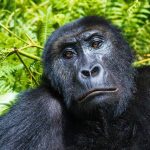

Top Primate and Wild Destinations. There is something different about meeting a primate in the wild. Their eyes are thoughtful, their hands look like ours, and their families squabble, play, and comfort each other in ways that feel strangely familiar. Pair that with the wider drama of the wild, such as lions on open plains and elephants crossing rivers, and you have the makings of a trip that stays with you for life.
This guide covers the top destinations for primates and wildlife, what each offers, and how to choose.
At a Glance
| Destination | Star Animals | Best For |
|---|---|---|
| Uganda | Gorillas, chimpanzees, tree-climbing lions | Variety and adventure |
| Rwanda | Mountain gorillas, chimps, golden monkeys | Short, polished trips |
| Tanzania | Chimps (Gombe, Mahale), Great Migration | Primates plus classic safari |
| Central Africa | Western lowland gorillas | Remote wilderness |
| Madagascar | Lemurs | Animals found nowhere else |
| Borneo and Sumatra | Orangutans | Rainforest adventure in Asia |
| Japan | Snow monkeys | A unique, photogenic encounter |
| Kenya and Botswana | Big cats, elephants, vast herds | Classic wildlife spectacle |
Africa’s Top Primate Destinations
1. Uganda: The Pearl of Africa
Star animals: Mountain gorillas, chimpanzees, and over a dozen other primate species
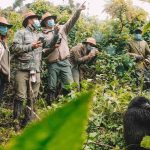
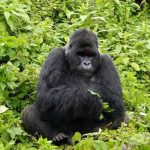
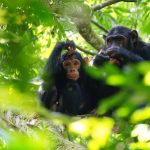
Uganda is one of the best all-round destinations for primates. Bwindi Impenetrable National Park shelters around half of the world’s mountain gorillas, while Kibale National Park offers some of the best chimpanzee tracking in Africa. Mgahinga adds golden monkeys and volcano scenery.
What sets Uganda apart is that it is also a full wildlife destination. You can add tree-climbing lions in Queen Elizabeth National Park, boat cruises on the Kazinga Channel, and the Nile roaring through Murchison Falls.
Best for: Travelers who want primates, safari, and adventure in one compact country.
2. Rwanda: Short, Safe, and Polished
Star animals: Mountain gorillas, chimpanzees, golden monkeys
Volcanoes National Park is a few hours’ drive from Kigali, so gorilla trekking can fit into a short trip. Nyungwe Forest offers chimpanzee tracking and a canopy walkway above the treetops, and Akagera National Park adds savanna game drives.
Best for: Travelers with limited time who want a well-organized, premium experience. Gorilla permits cost more than in Uganda.
3. Tanzania: Chimps and Classic Safari
Star animals: Chimpanzees, plus the Great Migration
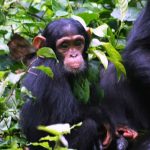
Tanzania offers two remote chimpanzee destinations on Lake Tanganyika. Gombe Stream National Park is famous as the site of Jane Goodall’s pioneering chimpanzee research, and Mahale Mountains National Park is a wild, far-flung park known for chimps and lake scenery. Both are remote, so plan extra travel time.
Add the Serengeti and Ngorongoro Crater for one of the world’s best classic safaris.
Best for: Travelers who want a remote primate experience combined with iconic big-game viewing.
4. Gabon and the Republic of Congo: Western Lowland Gorillas
Star animals: Western lowland gorillas, forest elephants
Parks such as Loango in Gabon and Odzala-Kokoua in the Republic of Congo offer a wilder, more remote kind of forest adventure. Visits are less developed and often pricier than in East Africa, but they appeal to seasoned travelers who want somewhere truly off the beaten path.
Best for: Experienced adventurers.
5. Democratic Republic of Congo
Star animals: Mountain gorillas and other great apes
Parks such as Virunga offer dramatic gorilla trekking, but conditions can change. Check current travel advice and use only highly experienced operators.
Primate Destinations Beyond Africa – Top Primate and Wild Destinations
6. Madagascar: The Island of Lemurs
Star animals: Lemurs, including the indri, which is known for its haunting call
Lemurs are primates found only in Madagascar, and the island’s forests, such as Andasibe-Mantadia, are famous for them. Expect leaping sifakas, ring-tailed lemurs in drier regions, and night walks for nocturnal species. Madagascar is also remarkable for its unusual plants and reptiles.
Best for: Travelers who want animals they cannot see anywhere else.
7. Borneo: Orangutans in the Rainforest – Top Primate and Wild Destinations
Star animals: Orangutans, proboscis monkeys
Borneo is one of the best places to see orangutans. In Malaysian Borneo (Sabah), the Kinabatangan River offers boat cruises for orangutans, proboscis monkeys, and elephants, while the Sepilok centre helps care for rescued orangutans. In Indonesian Borneo, Tanjung Puting National Park is known for river-boat journeys through orangutan habitat.
Best for: Travelers who love river cruises and rainforest scenery.
8. Sumatra: Wild Orangutans in Dense Jungle – Top Primate and Wild Destinations
Star animals: Orangutans, gibbons
Sumatra’s rainforest, including the Gunung Leuser area near Bukit Lawang, offers jungle trekking to see orangutans in the wild. Treks here can be hot, humid, and demanding, but they reward you with a true jungle experience.
Best for: Active travelers.
9. Japan: The Snow Monkeys
Star animals: Japanese macaques
At Jigokudani Monkey Park in the mountains of Nagano, macaques soak in natural hot springs while snow falls around them. It is one of the most charming and photogenic primate encounters in the world, and it is best in winter.
Best for: Photographers and winter travelers.
Top Wild Destinations for Big Game – Top Primate and Wild Destinations
Many primate trips pair beautifully with classic wildlife viewing.
Serengeti and Maasai Mara (Tanzania and Kenya)
Home to the Great Migration, with huge herds of wildebeest and zebras followed by lions, cheetahs, and crocodiles. Between roughly July and October, the herds cross the Mara River, one of the great wildlife spectacles on Earth.
Okavango Delta and Chobe (Botswana)
A maze of channels, islands, and floodplains where you can explore by mokoro canoe, on foot, and by vehicle. Chobe is known for big elephant herds and river safaris.
Kruger and Private Reserves (South Africa)
Excellent infrastructure, Big Five opportunities, and options for every budget. A great choice for first-timers and families.
South Luangwa (Zambia)
Often called the birthplace of the walking safari, with superb leopard sightings and a raw, immersive feel.
Murchison Falls and Queen Elizabeth (Uganda)
Savanna wildlife, Nile cruises, and tree-climbing lions, easy to pair with primate trekking.
Primates vs. Big Game: What’s the Difference?
| Primate Trips | Big Game Safaris | |
|---|---|---|
| Pace | Slower, quieter | Wide-open, energetic |
| Style | Mostly on foot | Mostly by vehicle |
| Terrain | Forest, mud, steep slopes | Savanna, plains, rivers |
| Feeling | Close and personal | Epic and sweeping |
| Best together? | Yes, they complement each other |
Combining the two gives you the full picture of a country’s wildlife.
How to Choose Your Destination – Top Primate and Wild Destinations
Ask yourself:
- What do I most want to see? Gorillas, chimps, orangutans, lemurs, or big cats?
- How much time do I have? Rwanda suits a short trip, while Uganda and Tanzania reward 10 days or more.
- How active am I? Sumatra and Gombe are demanding, while Kibale and Budongo are easier.
- What is my budget? Rwanda gorilla permits and remote Central African lodges sit at the premium end, while Uganda offers wider choice.
- When can I travel? Timing affects trails, weather, and crowds.
Popular combinations:
- Uganda plus Rwanda for gorillas and chimps
- Uganda plus Tanzania or Kenya for primates and the Great Migration
- Rwanda plus Tanzania for a short, high-impact trip
- Borneo plus Sumatra for an orangutan-focused Asian adventure
When to Go – Top Primate and Wild Destinations
- Africa’s dry seasons (East Africa roughly June to September and December to February) are best for trekking and wildlife viewing.
- Green seasons bring lush scenery, fewer visitors, and good birding, with muddier trails.
- Madagascar and Asia have their own seasonal patterns, so check the best months for each destination.
- Japan’s snow monkeys are best seen in winter.
What to Pack for Primate Trips
- Waterproof hiking boots with good grip
- Long sleeves and long trousers in neutral colors
- A light rain jacket
- Gardening gloves for gripping vegetation
- Insect repellent and sunscreen
- Binoculars and a camera that handles low light (no flash near primates)
- A daypack, water bottle, and power bank
Rules for Meeting Wild Primates
- Keep your distance and speak softly.
- Never feed or touch the animals.
- Don’t eat or drink near them.
- Tell your guide if you feel unwell, since great apes can catch human illnesses.
- Follow your ranger’s instructions at all times.
- Minimum ages apply for many treks. Confirm the current rules with your operator.
Health, Safety, and Costs
- See a travel clinic well before departure about vaccinations and malaria prevention. Requirements vary by country.
- Choose travel insurance that covers trekking and medical evacuation.
- The main costs are permits, park fees, accommodation, transport, and guides. Prices change, so confirm current rates with your operator.
- Book early, especially for gorilla permits.
Travel That Protects Wildlife
Primate and wildlife tourism funds conservation. Permit and park fees help pay for rangers, anti-poaching patrols, and research, and nearby communities earn income from guiding, lodges, and crafts. To add to the impact:
- Choose licensed, responsible operators
- Hire local guides and porters
- Stay in locally owned lodges
- Follow every park rule
Frequently Asked Questions
Where is the best place to see gorillas?
Uganda and Rwanda are the most popular choices for mountain gorillas.
Where is the best place to see chimpanzees?
Kibale in Uganda is a top pick, with Gombe and Mahale in Tanzania for a remote experience.
Where can I see orangutans?
Borneo and Sumatra.
Where can I see lemurs?
Only in Madagascar.
Can I combine primates and big game?
Yes, and it often makes for the best trip.
Are sightings guaranteed?
No, because the animals are wild, but trackers and guides have strong success rates.
Final Thoughts
The planet’s primates and wild places remind us how much there is to protect and how rewarding it is to meet it face to face. Whether it’s a silverback gorilla in Uganda, a chimp family in Tanzania, an orangutan in Borneo, or a lion pride on the Serengeti, each encounter leaves a mark.
There is something different about meeting a primate in the wild. Their eyes are thoughtful, their hands look like ours, and their families squabble, play, and comfort each other in ways that feel strangely familiar. Pair that with the wider drama of the wild, such as lions on open plains and elephants crossing rivers, and you have the makings of a trip that stays with you for life.
This guide covers the top destinations for primates and wildlife, what each offers, and how to choose.
At a Glance
| Destination | Star Animals | Best For |
|---|---|---|
| Uganda | Gorillas, chimpanzees, tree-climbing lions | Variety and adventure |
| Rwanda | Mountain gorillas, chimps, golden monkeys | Short, polished trips |
| Tanzania | Chimps (Gombe, Mahale), Great Migration | Primates plus classic safari |
| Central Africa | Western lowland gorillas | Remote wilderness |
| Madagascar | Lemurs | Animals found nowhere else |
| Borneo and Sumatra | Orangutans | Rainforest adventure in Asia |
| Japan | Snow monkeys | A unique, photogenic encounter |
| Kenya and Botswana | Big cats, elephants, vast herds | Classic wildlife spectacle |
Africa’s Top Primate Destinations
1. Uganda: The Pearl of Africa
Star animals: Mountain gorillas, chimpanzees, and over a dozen other primate species
Uganda is one of the best all-round destinations for primates. Bwindi Impenetrable National Park shelters around half of the world’s mountain gorillas, while Kibale National Park offers some of the best chimpanzee tracking in Africa. Mgahinga adds golden monkeys and volcano scenery.
What sets Uganda apart is that it is also a full wildlife destination. You can add tree-climbing lions in Queen Elizabeth National Park, boat cruises on the Kazinga Channel, and the Nile roaring through Murchison Falls.
Best for: Travelers who want primates, safari, and adventure in one compact country.
2. Rwanda: Short, Safe, and Polished
Star animals: Mountain gorillas, chimpanzees, golden monkeys
Volcanoes National Park is a few hours’ drive from Kigali, so gorilla trekking can fit into a short trip. Nyungwe Forest offers chimpanzee tracking and a canopy walkway above the treetops, and Akagera National Park adds savanna game drives.
Best for: Travelers with limited time who want a well-organized, premium experience. Gorilla permits cost more than in Uganda.
3. Tanzania: Chimps and Classic Safari
Star animals: Chimpanzees, plus the Great Migration
Tanzania offers two remote chimpanzee destinations on Lake Tanganyika. Gombe Stream National Park is famous as the site of Jane Goodall’s pioneering chimpanzee research, and Mahale Mountains National Park is a wild, far-flung park known for chimps and lake scenery. Both are remote, so plan extra travel time.
Add the Serengeti and Ngorongoro Crater for one of the world’s best classic safaris.
Best for: Travelers who want a remote primate experience combined with iconic big-game viewing.
4. Gabon and the Republic of Congo: Western Lowland Gorillas
Star animals: Western lowland gorillas, forest elephants
Parks such as Loango in Gabon and Odzala-Kokoua in the Republic of Congo offer a wilder, more remote kind of forest adventure. Visits are less developed and often pricier than in East Africa, but they appeal to seasoned travelers who want somewhere truly off the beaten path.
Best for: Experienced adventurers.
5. Democratic Republic of Congo
Star animals: Mountain gorillas and other great apes
Parks such as Virunga offer dramatic gorilla trekking, but conditions can change. Check current travel advice and use only highly experienced operators.
Primate Destinations Beyond Africa
6. Madagascar: The Island of Lemurs
Star animals: Lemurs, including the indri, which is known for its haunting call
Lemurs are primates found only in Madagascar, and the island’s forests, such as Andasibe-Mantadia, are famous for them. Expect leaping sifakas, ring-tailed lemurs in drier regions, and night walks for nocturnal species. Madagascar is also remarkable for its unusual plants and reptiles.
Best for: Travelers who want animals they cannot see anywhere else.
7. Borneo: Orangutans in the Rainforest
Star animals: Orangutans, proboscis monkeys
Borneo is one of the best places to see orangutans. In Malaysian Borneo (Sabah), the Kinabatangan River offers boat cruises for orangutans, proboscis monkeys, and elephants, while the Sepilok centre helps care for rescued orangutans. In Indonesian Borneo, Tanjung Puting National Park is known for river-boat journeys through orangutan habitat.
Best for: Travelers who love river cruises and rainforest scenery.
8. Sumatra: Wild Orangutans in Dense Jungle
Star animals: Orangutans, gibbons
Sumatra’s rainforest, including the Gunung Leuser area near Bukit Lawang, offers jungle trekking to see orangutans in the wild. Treks here can be hot, humid, and demanding, but they reward you with a true jungle experience.
Best for: Active travelers.
9. Japan: The Snow Monkeys
Star animals: Japanese macaques
At Jigokudani Monkey Park in the mountains of Nagano, macaques soak in natural hot springs while snow falls around them. It is one of the most charming and photogenic primate encounters in the world, and it is best in winter.
Best for: Photographers and winter travelers.
Top Wild Destinations for Big Game
Many primate trips pair beautifully with classic wildlife viewing.
Serengeti and Maasai Mara (Tanzania and Kenya)
Home to the Great Migration, with huge herds of wildebeest and zebras followed by lions, cheetahs, and crocodiles. Between roughly July and October, the herds cross the Mara River, one of the great wildlife spectacles on Earth.
Okavango Delta and Chobe (Botswana)
A maze of channels, islands, and floodplains where you can explore by mokoro canoe, on foot, and by vehicle. Chobe is known for big elephant herds and river safaris.
Kruger and Private Reserves (South Africa)
Excellent infrastructure, Big Five opportunities, and options for every budget. A great choice for first-timers and families.
South Luangwa (Zambia)
Often called the birthplace of the walking safari, with superb leopard sightings and a raw, immersive feel.
Murchison Falls and Queen Elizabeth (Uganda)
Savanna wildlife, Nile cruises, and tree-climbing lions, easy to pair with primate trekking.
Primates vs. Big Game: What’s the Difference?
| Primate Trips | Big Game Safaris | |
|---|---|---|
| Pace | Slower, quieter | Wide-open, energetic |
| Style | Mostly on foot | Mostly by vehicle |
| Terrain | Forest, mud, steep slopes | Savanna, plains, rivers |
| Feeling | Close and personal | Epic and sweeping |
| Best together? | Yes, they complement each other |
Combining the two gives you the full picture of a country’s wildlife.
How to Choose Your Destination
Ask yourself:
- What do I most want to see? Gorillas, chimps, orangutans, lemurs, or big cats?
- How much time do I have? Rwanda suits a short trip, while Uganda and Tanzania reward 10 days or more.
- How active am I? Sumatra and Gombe are demanding, while Kibale and Budongo are easier.
- What is my budget? Rwanda gorilla permits and remote Central African lodges sit at the premium end, while Uganda offers wider choice.
- When can I travel? Timing affects trails, weather, and crowds.
Popular combinations:
- Uganda plus Rwanda for gorillas and chimps
- Uganda plus Tanzania or Kenya for primates and the Great Migration
- Rwanda plus Tanzania for a short, high-impact trip
- Borneo plus Sumatra for an orangutan-focused Asian adventure
When to Go
- Africa’s dry seasons (East Africa roughly June to September and December to February) are best for trekking and wildlife viewing.
- Green seasons bring lush scenery, fewer visitors, and good birding, with muddier trails.
- Madagascar and Asia have their own seasonal patterns, so check the best months for each destination.
- Japan’s snow monkeys are best seen in winter.
What to Pack for Primate Trips – Top Primate and Wild Destinations
- Waterproof hiking boots with good grip
- Long sleeves and long trousers in neutral colors
- A light rain jacket
- Gardening gloves for gripping vegetation
- Insect repellent and sunscreen
- Binoculars and a camera that handles low light (no flash near primates)
- A daypack, water bottle, and power bank
Rules for Meeting Wild Primates
- Keep your distance and speak softly.
- Never feed or touch the animals.
- Don’t eat or drink near them.
- Tell your guide if you feel unwell, since great apes can catch human illnesses.
- Follow your ranger’s instructions at all times.
- Minimum ages apply for many treks. Confirm the current rules with your operator.
Health, Safety, and Costs – Top Primate and Wild Destinations
- See a travel clinic well before departure about vaccinations and malaria prevention. Requirements vary by country.
- Choose travel insurance that covers trekking and medical evacuation.
- The main costs are permits, park fees, accommodation, transport, and guides. Prices change, so confirm current rates with your operator.
- Book early, especially for gorilla permits.
Travel That Protects Wildlife – Top Primate and Wild Destinations
Primate and wildlife tourism funds conservation. Permit and park fees help pay for rangers, anti-poaching patrols, and research, and nearby communities earn income from guiding, lodges, and crafts. To add to the impact:
- Choose licensed, responsible operators
- Hire local guides and porters
- Stay in locally owned lodges
- Follow every park rule
Frequently Asked Questions – Top Primate and Wild Destinations
Where is the best place to see gorillas?
Uganda and Rwanda are the most popular choices for mountain gorillas.
Where is the best place to see chimpanzees?
Kibale in Uganda is a top pick, with Gombe and Mahale in Tanzania for a remote experience.
Where can I see orangutans?
Borneo and Sumatra.
Where can I see lemurs?
Only in Madagascar.
Can I combine primates and big game?
Yes, and it often makes for the best trip.
Are sightings guaranteed?
No, because the animals are wild, but trackers and guides have strong success rates.
Final Thoughts – Top Primate and Wild Destinations
Lavish Safaris Uganda. The planet’s primates and wild places remind us how much there is to protect and how rewarding it is to meet it face to face. Whether it’s a silverback gorilla in Uganda, a chimp family in Tanzania, an orangutan in Borneo, or a lion pride on the Serengeti, each encounter leaves a mark.