Uganda Trekking Tour. Trek up a misty ridge to find a gorilla family. Follow the hooting of chimpanzees through the canopy. Climb through moss-draped forest toward glaciers on the equator. In Uganda, the best views and the best wildlife moments are reached on foot.
This guide covers the best trekking tours in Uganda, what each involves, how hard each one is, and how to plan your trip.
Why Trek in Uganda?
- Wildlife up close. Gorillas, chimpanzees, golden monkeys, and hundreds of bird species are found on foot-only trails.
- Huge variety. Rainforest, volcanoes, wetlands, waterfalls, and snow-capped peaks all lie within one small country.
- Treks for every level. Choose a gentle two-hour forest walk or a multi-day mountain expedition.
- Local guides and porters. Trekking directly supports the people who live beside the parks.
- Fewer crowds. Many trails feel quiet and uncrowded, even in busy months.
Choose Your Trek at a Glance
| Trek | Best For | Difficulty | Time Needed |
|---|---|---|---|
| Gorilla trekking (Bwindi, Mgahinga) | Mountain gorillas | Moderate to hard | Half day to full day |
| Chimpanzee tracking (Kibale, Budongo) | Chimps and primates | Easy to moderate | Half day |
| Golden monkey tracking (Mgahinga) | Rare monkeys | Easy to moderate | Half day |
| Virunga volcano hikes (Mgahinga) | Volcano views | Moderate to hard | Full day |
| Rwenzori Mountains | Mountain scenery | Hard | 1 to 9 days |
| Mount Elgon and Sipi Falls | Caldera and waterfalls | Easy to hard | 1 to 6 days |
| Crater lake and wetland walks | Easy nature walks | Easy | 2 to 4 hours |
Difficulty varies with weather and terrain. Ask your operator for current advice.
Wildlife Treks
Gorilla Trekking
Where: Bwindi Impenetrable National Park and Mgahinga Gorilla National Park
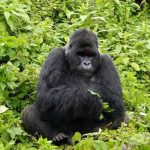
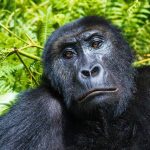
This is Uganda’s signature trek. Rangers brief you and assign a gorilla family. Trackers then lead you through dense, steep forest. The hike can take under an hour or several hours, depending on where the gorillas spent the night. Once you find them, you spend one hour in their presence.
Good to know:
- Bwindi has several sectors, including Buhoma, Ruhija, Rushaga, and Nkuringo, each with its own scenery and lodges.
- Permits are limited, so book well ahead.
- Hire a porter. It helps on steep slopes and supports local families.
- A minimum age applies, usually 15.
Chimpanzee Tracking
Where: Kibale National Park, Budongo Forest, Kyambura Gorge, and Kalinzu Forest
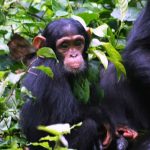
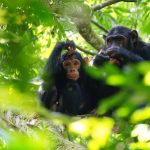
Chimp treks are lively and loud. You may hear hooting and drumming long before you see the chimps. Kibale is the most popular choice, with a longer, full-day habituation experience for those who want more time with the animals.
Golden Monkey Tracking
Where: Mgahinga Gorilla National Park
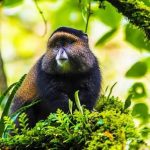
Golden monkeys are rare, playful, and usually found in bamboo forest. The trek is often gentler than gorilla trekking, and it makes a good add-on.
Rhino Tracking on Foot
Where: Ziwa Rhino Sanctuary
Walk through savanna with rangers to see wild southern white rhinos from a respectful distance. It is an easy, rewarding stop on the way to Murchison Falls.
Mountain and Volcano Treks
Rwenzori Mountains National Park
Known as the “Mountains of the Moon,” the Rwenzoris are one of Africa’s great trekking destinations. Trails climb from lowland forest through bamboo, then giant heather and moss-draped woodland, before reaching alpine terrain and glaciers on the highest peaks.
Your options:
- Short day hikes that give you a taste of the forest and valleys
- Multi-day treks into the higher mountains, with overnight stays in mountain huts
- Summit-focused expeditions for experienced trekkers with technical gear and guides
Be ready for: Mud, rain, and cold. Good boots, layers, and waterproofs matter more here than anywhere else in Uganda.
Virunga Volcano Hikes
Where: Mgahinga Gorilla National Park
Three volcanoes rise above Mgahinga: Muhabura, Gahinga, and Sabinyo. Hikes range from a moderate climb up Gahinga to a long, demanding day on Muhabura. Views stretch across the Uganda, Rwanda, and DR Congo borderlands.
Mount Elgon National Park
Mount Elgon is an ancient extinct volcano on the Kenyan border, with one of the largest volcanic calderas in the world. Trails lead through forest, moorland, hot springs, and caves. Options range from short day walks to multi-day treks to the caldera rim and peaks.
Nearby: The Sipi Falls area has three waterfalls, scenic walks, and coffee tours. It is a good place to rest after a big trek.
Easy Walks and Gentle Treks
Not every trek needs to be demanding.
- Bigodi Wetland Sanctuary: A community-run walk near Kibale for monkeys, birds, and swamp scenery.
- Mabira Forest: A short forest escape near Jinja, ideal for birdwatching.
- Crater lake walks near Fort Portal: Scenic loops with sweeping views.
- Lake Bunyonyi: Gentle hill walks and canoe trips in a calm highland setting.
- Mabamba Swamp: A boat-and-walk trip for the shoebill, one of Africa’s most sought-after birds.
- Kyambura Gorge: A guided walk down into a lush forest gorge within Queen Elizabeth National Park.
Sample Trekking Itineraries
6 Days: Primate Trek Express
| Day | Plan |
|---|---|
| 1 | Arrive in Entebbe, travel toward Kibale |
| 2 | Chimpanzee tracking, Bigodi Wetland walk |
| 3 | Travel via Queen Elizabeth National Park |
| 4 | Travel to Bwindi |
| 5 | Gorilla trekking |
| 6 | Return journey and departure |
10 Days: Gorillas, Chimps, and Mountains
| Day | Plan |
|---|---|
| 1 | Arrive in Entebbe |
| 2-3 | Kibale Forest, chimpanzee tracking |
| 4 | Queen Elizabeth National Park, Kyambura Gorge |
| 5 | Ishasha, then travel to Bwindi |
| 6 | Gorilla trekking |
| 7 | Mgahinga, golden monkey tracking |
| 8 | Volcano hike or rest day |
| 9 | Lake Bunyonyi |
| 10 | Return and depart |
14 Days: The Ultimate Uganda Trek
| Days | Plan |
|---|---|
| 1-2 | Arrive and explore Entebbe or Jinja |
| 3-4 | Murchison Falls and Budongo Forest |
| 5-6 | Kibale and chimpanzees |
| 7-9 | Rwenzori Mountains trek |
| 10 | Queen Elizabeth National Park |
| 11-12 | Bwindi and gorilla trekking |
| 13 | Lake Bunyonyi |
| 14 | Return and depart |
Your operator can adjust any plan to your fitness, time, and budget.
When to Trek
- Dry seasons (roughly December to February and June to September): Trails are less slippery, views are clearer, and mountain treks are more comfortable. These are the busiest months, so book early.
- Wet seasons (roughly March to May and October to November): The forest is lush, crowds are smaller, and birding is excellent. Trails are muddier, and mountain treks are harder.
Gorillas and chimps can be seen all year. Rain can fall in any month near the equator, so waterproofs are essential.
Fitness and Preparation – Uganda Trekking Tour
You don’t need to be an athlete for most treks, but preparation helps.
A few weeks before you go:
- Walk regularly, ideally on hills or stairs
- Break in your hiking boots
- Practice carrying a daypack
- For mountain treks, add longer hikes and strength training
On the trail:
- Walk slowly and steadily
- Drink water often
- Rest when you need to, and tell your guide how you feel
- Use a porter or walking stick on steep sections
What to Pack – Uganda Trekking Tour
Clothing:
- Waterproof hiking boots with good grip
- Long-sleeved shirts and long trousers in neutral colors
- A lightweight rain jacket
- Warm layers for mornings and mountain treks
- A hat and sunglasses
Gear:
- Gardening gloves for gripping vegetation
- Gaiters or long socks
- A daypack with a rain cover
- A refillable water bottle
- Insect repellent and sunscreen
- Binoculars and a camera that handles low light (no flash near primates)
- A power bank
- Personal medication and a small first-aid kit
For the Rwenzori Mountains: Add warm gloves, a hat, thermal layers, trekking poles, and waterproof trousers. Your operator or the park can advise on hired gear.
Rules on the Trail – Uganda Trekking Tour
- Follow your ranger or guide at all times.
- Keep your distance from wildlife and speak softly.
- Never feed or touch animals.
- Don’t eat or drink near primates.
- Tell your guide if you feel unwell, since great apes can catch human illnesses.
- Carry out all trash, and stay on marked trails.
- Ask before photographing people.
Health and Safety – Uganda Trekking Tour
- Vaccinations and malaria prevention: See a travel clinic well before you travel. Yellow fever proof is commonly requested.
- Travel insurance: Choose a policy covering trekking and medical evacuation. Check the maximum altitude it covers before a mountain trek.
- Altitude: On higher Rwenzori and Elgon routes, go slowly and tell your guide about headaches, nausea, or dizziness.
- Guides: Always trek with licensed rangers and guides.
How Much Does It Cost? – Uganda Trekking Tour
The main costs are:
- Gorilla and chimpanzee permits
- Park entrance fees
- Accommodation
- Transport and fuel
- Guides, porters, and equipment hire
- Mountain hut fees on multi-day treks
Permit prices and fees change, so confirm current rates with your operator before budgeting.
Ways to manage costs:
- Travel in the wet season
- Join a small group
- Mix mid-range and budget lodges
- Book permits and flights early
How to Choose a Trekking Operator – Uganda Trekking Tour
- Check for a valid license from the Uganda Tourism Board
- Ask for an itemized quote showing what is and isn’t included
- Ask about guide experience, safety standards, and group sizes
- Read recent reviews on independent sites
- Confirm who books your permits and what happens if your dates change
- Look for a real commitment to local communities and conservation
Red flags: prices far below others, pressure to pay at once, and vague promises of “guaranteed” permits.
Trekking That Gives Back – Uganda Trekking Tour
Trekking tourism supports conservation and local livelihoods. Permit and park fees fund rangers, anti-poaching patrols, and research. Communities near the parks earn income from guiding, portering, lodges, and crafts.
You can add to the impact by:
- Hiring local guides and porters
- Staying in locally owned lodges
- Buying crafts directly from artisans
- Following every park rule
Frequently Asked Questions – Uganda Trekking Tour
What is the best trek in Uganda?
For wildlife, gorilla trekking in Bwindi. For mountain scenery, the Rwenzori Mountains.
Do I need to be very fit?
Not for every trek. Gorilla and chimp treks need moderate fitness, and porters are available. Rwenzori and volcano hikes need more.
Are wildlife sightings guaranteed?
No, because the animals are wild. Trackers have strong success rates, though.
Can I combine several treks?
Yes. Most travelers combine two or three, for example chimps, gorillas, and a mountain hike.
Are treks suitable for families?
Often, yes, but age limits apply to gorilla and chimp trekking.
Is it safe?
Many visitors trek safely every year. Use a licensed operator and follow your guide.
Final Thoughts – Uganda Trekking Tour
Lavish Safaris Uganda. Trekking changes how you travel. You slow down, listen more, and notice details that a vehicle would carry you past: the smell of wet earth, the call of a hidden bird, the sudden stillness before a gorilla steps into view.