
Adventure Safari Uganda. Some safaris are about watching from a distance. A Uganda adventure safari is about getting close: tracking gorillas through misty forest, hiking beside chimpanzees, rafting the source of the Nile, and hearing lions call across a savanna you’ve just explored on foot.
Winston Churchill called Uganda the “Pearl of Africa,” and the name fits. In a country about the size of the UK, you can see mountain gorillas, tree-climbing lions, snow-capped peaks near the equator, thundering waterfalls, and more than 1,000 bird species. Few places pack in so much variety, and few make it so easy to try it all in one trip.
Why Uganda Is Perfect for Adventure Travelers
Variety in a compact space. Most of Uganda’s top destinations are a day’s drive or a short flight apart, so you spend more time exploring and less time in transit.
Active, hands-on experiences. Trekking, boating, rafting, hiking, and cycling are woven into the safari itself.
Fewer crowds. Compared with some of Africa’s busier safari circuits, Uganda feels wilder and more intimate. You often have a viewpoint or trail nearly to yourself.
Warm, welcoming people. Ugandans are known for their hospitality, and it shapes the whole experience, from lodge staff to village visits.
The Big Adventures
1. Gorilla Trekking in Bwindi Impenetrable National Park
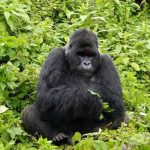
This is the experience Uganda is most famous for. Roughly half of the world’s remaining mountain gorillas live in the Virunga region, and a large share of them are in Bwindi’s ancient, misty forest.
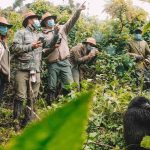
Your day begins with a briefing from the rangers. Then you follow trackers into dense, steep forest, sometimes for an hour, sometimes for several. When you find the family, you get one hour in their presence. A silverback may stroll past within a few meters, juveniles tumble and play, and mothers cradle their infants.
Good to know:
- Permits are limited and should be booked well in advance.
- Pack waterproof layers, gaiters, gloves for gripping vegetation, and sturdy boots.
- Porters are available to carry your bag and help on steep slopes, and hiring one supports local families.
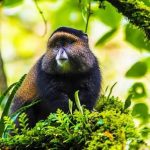
- Mgahinga Gorilla National Park, in the far southwest, is another option and also offers golden monkey tracking.
2. Chimpanzee Tracking in Kibale Forest
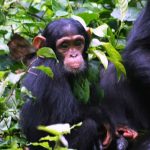
Kibale is often called the primate capital of the world, with a dozen or more primate species. Chimpanzee tracking here is energetic and noisy in the best way: hooting, drumming on buttress roots, and chimps swinging overhead. For a deeper experience, ask about the full-day habituation option, where you spend longer with the chimps as they go about their day.
3. White-Water Rafting and Adventure Sports in Jinja
Jinja, near the source of the Nile, is East Africa’s adventure capital. The river here offers some of the world’s most exciting white-water rafting, with warm water and big rapids suited to both first-timers and seasoned paddlers. If you’d rather stay dry, Jinja also offers:
- Kayaking
- Quad biking
- Horseback riding
- Bungee jumping
- Mountain biking
- Calm sunset boat cruises on the Nile
4. Murchison Falls National Park
Uganda’s largest park is dramatic in every sense. The mighty Nile squeezes through a narrow gorge and crashes down in a roaring waterfall. Your adventure here can include:
- Game drives to spot lions, elephants, giraffes, buffalo, and antelope
- A boat cruise up the Nile to the base of the falls, passing hippos, crocodiles, and huge numbers of waterbirds
- A hike to the top of the falls for a view that will drench you in mist and awe
5. Queen Elizabeth National Park
Queen Elizabeth packs savanna, lakes, crater lakes, and forest into one park. Highlights include:
- The Kazinga Channel boat safari, where elephants and buffalo come to drink right beside your boat
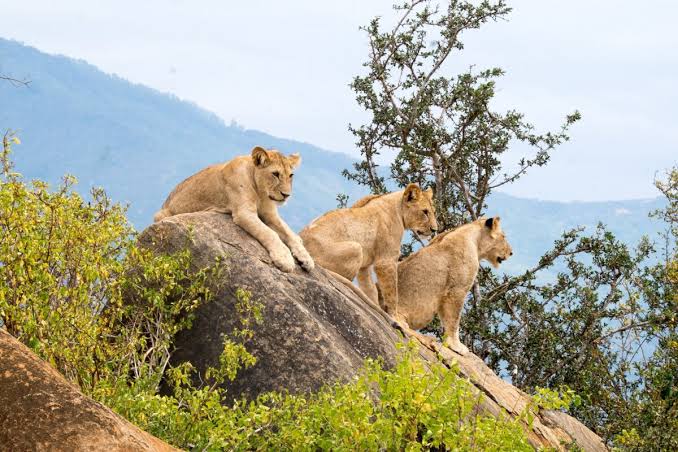
- Tree-climbing lions in the Ishasha sector, lounging in fig trees
- Game drives across open plains
- Crater lake scenery that makes for spectacular photos
6. Kidepo Valley National Park
For a truly remote and wild experience, head to the far northeast. Kidepo’s rugged mountains, wide valleys, and sense of isolation make it one of Africa’s most beautiful and least visited parks. It’s ideal for travelers who want solitude and big landscapes.
7. Hiking the Rwenzori Mountains
Known as the “Mountains of the Moon,” the Rwenzoris offer challenging treks through changing ecosystems, from moss-draped forest to alpine meadows and glacial peaks. Trekkers can choose shorter day hikes or multi-day routes, depending on fitness and ambition.
More Ways to Get Your Heart Racing
- Rhino tracking on foot at Ziwa Rhino Sanctuary, the only place in Uganda to see wild rhinos
- Birding for the shoebill in Mabamba Swamp, a prehistoric-looking bird that is a bucket-list sighting for many birders
- Hot air balloon safaris over the savanna at dawn in some parks
- Cycling and village walks that connect you with daily life and local traditions
- Lake Bunyonyi canoe trips and swims in a peaceful, scenic highland lake
Sample 10-Day Adventure Safari Itinerary
| Day | Destination | Activity |
|---|---|---|
| 1 | Entebbe/Kampala | Arrival, rest, briefing |
| 2 | Jinja | White-water rafting, Nile cruise |
| 3 | Kibale Forest | Travel, relax, evening nature walk |
| 4 | Kibale Forest | Chimpanzee tracking, Bigodi Wetland walk |
| 5 | Queen Elizabeth NP | Game drive, Kazinga Channel boat cruise |
| 6 | Ishasha | Tree-climbing lions, journey to Bwindi |
| 7 | Bwindi | Gorilla trekking |
| 8 | Lake Bunyonyi | Canoeing, relaxing, village visit |
| 9 | Return journey | Scenic drive, stop at the Equator |
| 10 | Entebbe | Departure |
Add Murchison Falls or Kidepo if you have extra days, or shorten the route if you want to focus on gorillas and one savanna park.
When to Go
- Dry seasons (roughly December to February and June to August): Trails are easier, roads are better, and wildlife is easier to spot around water. These are the most popular months.
- Wet seasons (roughly March to May and September to November): Landscapes are lush and green, crowds are smaller, and birding is superb. Trekking is muddier, but gorillas and chimps are still very much there.
Weather is never perfectly predictable near the equator, so pack rain gear whatever the month.
What to Pack – Adventure Safari Uganda
- Lightweight, quick-dry clothing in neutral colors
- Waterproof jacket and warm layers for early mornings and highlands
- Broken-in hiking boots with good grip
- Gloves, gaiters, and a hat
- Insect repellent and sunscreen
- Binoculars and a camera with spare batteries
- A refillable water bottle, a small daypack, and a power bank
Health, Safety, and Etiquette – Adventure Safari Uganda
- Vaccinations and malaria prevention: See a travel clinic well before your trip. Yellow fever vaccination is commonly required for entry, so check current rules.
- Travel insurance: Choose a policy that covers adventure activities and medical evacuation.
- Follow your guide: Rangers and guides know the terrain and animals. Their instructions are there for your safety and the animals’.
- Keep your distance from wildlife: Don’t feed animals, and stay quiet and calm during encounters.
- Gorilla health rules: If you’re unwell, tell the rangers. Gorillas are vulnerable to human illness, so people with colds or other contagious conditions may be asked not to trek.
- Respect local culture: Ask before photographing people, dress modestly in villages, and learn a few greetings.
Costs and Planning Tips – Adventure Safari Uganda
Prices vary widely depending on season, lodging, and activities. The biggest costs are usually gorilla permits, chimpanzee permits, park entry fees, transport, and accommodation. Permit prices change from time to time, so confirm current rates with your operator before budgeting.
A few ways to plan smart:
- Book early, especially gorilla permits for peak seasons.
- Mix budget and comfort, with a splurge lodge for the gorilla trek and simpler stays elsewhere.
- Choose a reliable local operator who knows the parks, the roads, and the permit system.
- Allow buffer time. Roads in remote regions can be slow, and that’s part of the adventure.
- Build in rest days. Trekking is rewarding but tiring.
Travel That Gives Back – Adventure Safari Uganda
Park fees and permits help protect habitats and fund rangers and conservation research. A share of gorilla permit revenue goes to nearby communities for schools, clinics, and infrastructure. You can add to that impact by staying at locally owned lodges, hiring local guides and porters, buying crafts from artisans, and eating at local restaurants.
Final Thoughts – Adventure Safari Uganda
With Lavish Safaris Uganda An adventure safari in Uganda isn’t about watching Africa through a window. It’s about stepping into it: muddy boots on a forest trail, spray on your face at the base of a waterfall, and a silverback gorilla’s gaze meeting yours across a clearing.